


 Posts
Posts



wCWk~%24(KGrHqV,!h8Ew5GsnS3dBMUy3MzVPg~~_3.jpg)

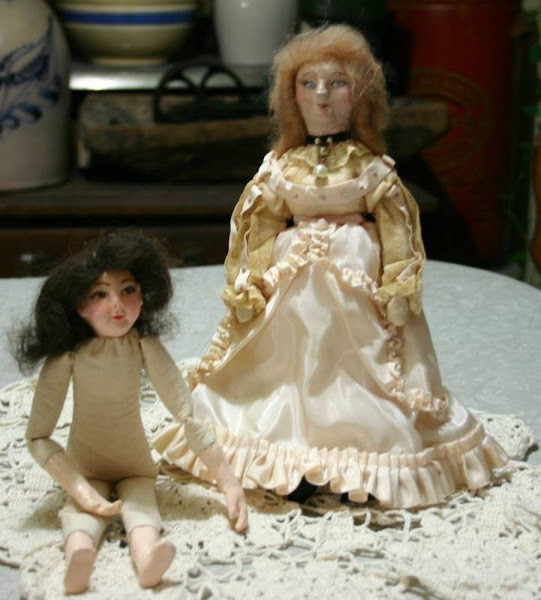


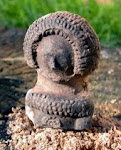




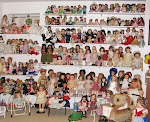
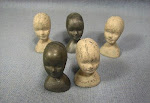


I've been asked what this book on metal dolls is about. Primarily, I'd have to say it was a labor of love that I began in 1986. I first read about dolls with metal heads when I was eight, and my mother bought me Helen Young's excellent text, The Complete Book of Doll Collecting. She wrote over forty years ago that metal heads, along with half dolls, some foreign dolls, and folk dolls, to name a few, were considered "secondaries" that people were not interested in. At the time, no one was collecting vintage Barbies or Ginny, or really any modern dolls. The only artist dolls that mattered were those gorgeous creations by the National Institute of American Doll Artists, N.I.A.D.A. Parians and china heads were got, with French Dolls and all antiques not far behind. Queen Anne dolls were around, but most were in Museums and I met a lot of collectors who felt that's where they belonged.
I first saw two perfect, mint condition twin metal heads with blonde hair and beautiful complexions at the home of a lady who was a friend of my Brownie leader. We were able to visit her collection, housed beautifully in the basement of her home, because my leader know how much I loved dolls. Indeed, I got special showing that day. The prize of Mrs. W's collection was her set of twin Minervas [I think that's what they were!]. They were dressed in light blue cotton bustle dresses trimmed in white lace. She kept them upstairs and felt they were her best dolls. Five years later, I bought my first metal head, a Minerva, in fair condition, in an antique shop in Wisconsin Dells. There were many shops then that featured old dolls, tourist dolls, and antique reproductions. I also bought my first Ginny on that trip from a shop set up in an old barn. There were big grey geese running underfoot the whole time! I found the body for the doll in the early 90s in Murfreesboro, TN. I was hooked after that, and started writing about them. I met many famous collectors and exchanged information with museums all over the world. I included dolls with metal parts in the book, all metal dolls, ritual idols and religious figures from the ancient world, and automatons and mechanical dolls. I was lucky enough to to find primary materials, and I have letters and other memorabilia from some of the great names in doll collecting. Two became my dear penpals and friends.
The Holy Grail for me is to locate the metal headed Huret that once belonged to Maureen Popp, and then Dorothy Dixon. Ms. Dixon wrote me a lovely letter after I learned she had the doll, but she would not send a photo. She said she had other plans for her pictures, but I don't know if they ever materialized. I'm not sure who sold her dolls after her death, either. I had to sketch the doll from an old photo and from other descriptions I had for the book. Needless to say, I would love to own her, but I'm realistic. Even correspondence with her owner, and a decent photo would thrill me.
Then, I included chapters on toy soldiers made of metal, and novelty dolls that walk, talk, eat, etc. I updated the book with trends in dolls and doll making and also talked about toy robots and other doll related figures.
It is not a picture book per se, though there are photos. There is a good index, and a lot of material for museums, interested collectors, and those who want to learn more about theirown dolls. I will excerpt it from time to time for those out there interested.
I would be very happy to hear from others who love metal dolls, and am also looking for an all steel ball jointed little girl doll, if there are any out there, and photos of a French metal doll by Lucien Vervelle.
Till later, Happy Doll Collecting!
Tuesday, March 23, 2010


The Bibliography of Doll Sources
Today is beautiful, sunny, and clear. It is crisp, the way only mid autumn and early spring can be crisp. I spied some jonquils here and there, and a few purple crocus. The orchid show and big Milan craft fair are this weekend. If I weren't involved so much with dolls, I'd be dealing with Orchids. But, I love them from afar. I couldn't begin to figure out how to care for them. Yet, they, too, have faces. And it is faces and figural lines that intrique me. For now, I'm happy with photographs, an orchid book here and there, and a gorgeous silk replica that fools a lot of people. Well, even that fits with doll collecting. Look at how many dolls play so closely with reality that when they are photographed, it is hard to tell if they are "real" or fake. I think many dollmakers had artist Duane Hansen and his superreal sculptures in mind as their muses when they began to create, but I digress.
If all works out, the bibliography will be ready for the QC bookfair. It is about 150 pages in length, with introductory material. For the most part, I am following MLA format and all works are listed in alphabetical order. Where I could not find a complete listing, I've given clues that one could Google or use as keywords to search The Internet. There are illustrations sprinkled throughout the book, largely taken by my husband, Dino Milani, who is, among other things, a fantastic photographer. I know, I'm shameless in my praixe.
There are some categories and subcategories, e.g., for magazines, coloring books, museums, bride dolls, cloth dolls, etc. I have included quite a few web pages, and some museums and businesses no longer in operation because they might be important in someone's research. I could have gone on, and am already thinking of a new, improved second volume or second edition.
This book has been in the works since 1993, and I know of nothing like it. I have included books about dolls and collecting, books and materials on all types of toys and games, ancient art, figurines, ritual figures and sculptures. There are primary works on history, art, and religion, biographyies, autobiographies, poems, paintings and plays. There are many website, though I doubt it is feasible to include all of those dealing with the subject. There are materials for making dolls and for paper dolls, for selling dolls, for women's studies and children's literature. The book covers all media including VCRs, DVDs, CDs, film, documentary, all genres of printed materials, etc.
In part, the entire work explores my theme questions, "What is a doll?" Sociologists and Anthropologists like to explore this definition, and doll collectors used to like to explore it. With any luck, a few more people will pick up on this blog, and will buy the book, which will be very reasonable. My hope is to promote research, and interest in the hobby which has enriched my life and broadened my horizons in so many ways. Till tomorrow! Happy collecting!
If all works out, the bibliography will be ready for the QC bookfair. It is about 150 pages in length, with introductory material. For the most part, I am following MLA format and all works are listed in alphabetical order. Where I could not find a complete listing, I've given clues that one could Google or use as keywords to search The Internet. There are illustrations sprinkled throughout the book, largely taken by my husband, Dino Milani, who is, among other things, a fantastic photographer. I know, I'm shameless in my praixe.
There are some categories and subcategories, e.g., for magazines, coloring books, museums, bride dolls, cloth dolls, etc. I have included quite a few web pages, and some museums and businesses no longer in operation because they might be important in someone's research. I could have gone on, and am already thinking of a new, improved second volume or second edition.
This book has been in the works since 1993, and I know of nothing like it. I have included books about dolls and collecting, books and materials on all types of toys and games, ancient art, figurines, ritual figures and sculptures. There are primary works on history, art, and religion, biographyies, autobiographies, poems, paintings and plays. There are many website, though I doubt it is feasible to include all of those dealing with the subject. There are materials for making dolls and for paper dolls, for selling dolls, for women's studies and children's literature. The book covers all media including VCRs, DVDs, CDs, film, documentary, all genres of printed materials, etc.
In part, the entire work explores my theme questions, "What is a doll?" Sociologists and Anthropologists like to explore this definition, and doll collectors used to like to explore it. With any luck, a few more people will pick up on this blog, and will buy the book, which will be very reasonable. My hope is to promote research, and interest in the hobby which has enriched my life and broadened my horizons in so many ways. Till tomorrow! Happy collecting!
Monday, March 22, 2010
The Ides Have it
We have survived yet another Ides of March. It is an interesting time in our household. It is one day past my father's birthday, and the birthday of my husband's late, great cat, Brutus [what else would we name him?] I know several other birthdays that take place on or about the Ides, and it is so near St. Patrick's Day that it is shrouded in Celtic mysteries. I used to love the mercurial weather, and even this year, we had snow on the 20th, first day of spring. Very early this morning I watched again part of a documentary on the sacred caves of Mustang, a mountain community high up in the Himalayas. It takes a team of crack mountain climbers to even get near these little caves dug in to sandy rock cliffs centuries ago. They were sacred temples of a culture that has been lost, but they contain ancient shrines and priceless paintings, artifacts, and manuscripts. Some of them haven't been seen for 600 or 700 years before now. It thrills me to watch the archaeologists and climbers work, and I wish I could be there with them. Oh, they deal with the usual red tape and administrivia, and no one can remove the artifcats, but the thrill of the hunt is definitely there. Don't any of us feel the same way at a good estate sale or rummage sale? Or, think of the first time you saw a painting that moved you, or viewed an exhibition of an artist you were really into. I think of Lovejoy in the mystery series by Jonathan Gash where Lovejoy, the antiques dealer and picker, gets a physical charge when he spots a good find. Or, even the feeling you get when you watch "Raiders of the Lost Ark."
My own trek with museum adventures continues at an achingly slow crawl. I have a name of someone who might be a good mentor, but I suffer from Hamlet's indecision. Do I call? Do I email? Do I ignore the whole thing? Ah, but what wonderful breakthrough or opportunity might slip through my grasp? So far, I have one letter in to the state, and must wait for their response. It's been five months. I have one grant written, which can't be submitted till I hear from the state, finish with my articles, send them, and apply for nonprofit status. I have one remote nibble on a building I can't possibly afford and know nothing about. What I do have are avalanches of archives and books which many people would find useful, and two books on dolls and doll research about to go to the printer, and some contacts at the publishers. And of course, a very large and varied doll collection. It's better than nothing.
And, I have to say my late and wonderful friend Mary was correct when she wrote, "Dolls are where you find them." I came away from the local Writers Banquet Saturday with a birthday Barbie I had never seen, and a miniature 1/4th scale dolls house's dolls house, ready to be furnished, and an ornate frame embellished with miniatures of books, antique busts, and reading memorabilia. I also picked up a fancy money clip to give to my little boy. He is 11, a budding collector, and entranced with all things that make him look grown up. You have to love silent auctions. I've discovered I'm not half bad at them.
On the downside, I found the doll of my dreams in EBay, but do not have the money for her right now. Well, neither does anyone else. I'm watching her, and hope she might be relisted. And, I have "doll friends" who are trying to beat me to the publisher and secrectly pre-empt me at my own field. I'm not totally paranoid; they want to see my unpublished work, then turn up giving lectures on dolls at places where I have been, and where they have been invited. Yet, no one tells me when they are talking or showing on the same topic until after the fact. Having said that, my second book for this year will be the complete history of metal dolls, automatons, and metal doll parts entitled, "With Love from Tin Lizzie." I've been working on it since 1986, and have written and spoken with individuals and museums all over the world. The good and bad thing about the collecting game is that it is competitive. And dolls, because they are human replicas, inspire a lot of emotion, and not all of it is good. My advice to anyone interested is, don't give in to the temptation to play "my collection is bigger than yours." It isn't fun, and you'll want to dump everything at a second hand shop out of sheer frustration. As a collector, I've always marched to my own drummer and collected what I like; I'll keep doing it.
I have some very rare photos in my book on metal dolls, and pictures of my own dolls. The entire book has been serialized in two major doll magazines during the late 80s and 90s, but I want the whole thing out there. No one has ever written a book on metal dolls, and I want to proclaim here and now that I am the first!
Yesterday was really productive. I managed to put away dolls and artifacts that I had used in recent lectures, and cleaned up some of the last of the refugees from last year's floods and other household disasters. They turned out very nicely. I also changed the miniature terrariums outside, and replaced Christmas and winter miniatures with spring and easter items. There are rabbits and rabbit houses, rocky paths and trees. As soon as it is safe, I'll look for miniature plants to add. The effect is really great.
Till next time, I will keep working on this format and try to figure out how to add photos and links. I appreciate all readers, and would love to hear some comments and responses. I recommended visiting the Smithsonian Webiste for their new exhibit, "What it means to be Human," or listen to the National Public Radio for the story. Also, the British Museum newsletter is a great place for collectors to learn new things. They have new guides regarding their exhibits that are worth exploring.
Perhap we can preview the next post with a question: What is your favorite doll to collect?
My own trek with museum adventures continues at an achingly slow crawl. I have a name of someone who might be a good mentor, but I suffer from Hamlet's indecision. Do I call? Do I email? Do I ignore the whole thing? Ah, but what wonderful breakthrough or opportunity might slip through my grasp? So far, I have one letter in to the state, and must wait for their response. It's been five months. I have one grant written, which can't be submitted till I hear from the state, finish with my articles, send them, and apply for nonprofit status. I have one remote nibble on a building I can't possibly afford and know nothing about. What I do have are avalanches of archives and books which many people would find useful, and two books on dolls and doll research about to go to the printer, and some contacts at the publishers. And of course, a very large and varied doll collection. It's better than nothing.
And, I have to say my late and wonderful friend Mary was correct when she wrote, "Dolls are where you find them." I came away from the local Writers Banquet Saturday with a birthday Barbie I had never seen, and a miniature 1/4th scale dolls house's dolls house, ready to be furnished, and an ornate frame embellished with miniatures of books, antique busts, and reading memorabilia. I also picked up a fancy money clip to give to my little boy. He is 11, a budding collector, and entranced with all things that make him look grown up. You have to love silent auctions. I've discovered I'm not half bad at them.
On the downside, I found the doll of my dreams in EBay, but do not have the money for her right now. Well, neither does anyone else. I'm watching her, and hope she might be relisted. And, I have "doll friends" who are trying to beat me to the publisher and secrectly pre-empt me at my own field. I'm not totally paranoid; they want to see my unpublished work, then turn up giving lectures on dolls at places where I have been, and where they have been invited. Yet, no one tells me when they are talking or showing on the same topic until after the fact. Having said that, my second book for this year will be the complete history of metal dolls, automatons, and metal doll parts entitled, "With Love from Tin Lizzie." I've been working on it since 1986, and have written and spoken with individuals and museums all over the world. The good and bad thing about the collecting game is that it is competitive. And dolls, because they are human replicas, inspire a lot of emotion, and not all of it is good. My advice to anyone interested is, don't give in to the temptation to play "my collection is bigger than yours." It isn't fun, and you'll want to dump everything at a second hand shop out of sheer frustration. As a collector, I've always marched to my own drummer and collected what I like; I'll keep doing it.
I have some very rare photos in my book on metal dolls, and pictures of my own dolls. The entire book has been serialized in two major doll magazines during the late 80s and 90s, but I want the whole thing out there. No one has ever written a book on metal dolls, and I want to proclaim here and now that I am the first!
Yesterday was really productive. I managed to put away dolls and artifacts that I had used in recent lectures, and cleaned up some of the last of the refugees from last year's floods and other household disasters. They turned out very nicely. I also changed the miniature terrariums outside, and replaced Christmas and winter miniatures with spring and easter items. There are rabbits and rabbit houses, rocky paths and trees. As soon as it is safe, I'll look for miniature plants to add. The effect is really great.
Till next time, I will keep working on this format and try to figure out how to add photos and links. I appreciate all readers, and would love to hear some comments and responses. I recommended visiting the Smithsonian Webiste for their new exhibit, "What it means to be Human," or listen to the National Public Radio for the story. Also, the British Museum newsletter is a great place for collectors to learn new things. They have new guides regarding their exhibits that are worth exploring.
Perhap we can preview the next post with a question: What is your favorite doll to collect?
Thursday, March 18, 2010
Collecting on a Budget
If the last doll show's prices are an accurate measure, prices for dolls may be steadily rising. I saw many good foreign dolls that were once in the $5.00 and other range now priced closer to book value. This range was from $15.00- $25.00 and up. I also saw one of my modern MIP early vinyl dolls selling for $495.00, when just four years ago I found her at a yard sale for $20.00 MIP. Antique bisque dolls were holding their own, as always, but there were not as many. French Fashion dolls in original but worn condition averaged at about $2300.00 while good German dolls 30" and over were selling from $500-$3,000. Many buyers seemed to be interested in character and celebrity dolls and more than a few shoppers brought dolls to be outfitted in new clothes or appraised. Redressed Chatty Cathy's cost $95.00, but I didn't think to ask if their voice boxes worked because I already have several. 1960s vintage Barbies were selling on the average at about $90.00 and up. I also saw a few reproduction dolls from the 70s and 80s begin to make an appearance at $175.00 and up. There were steady sales of "show special" dolls selling for $5.00 and $10.00and many of these were in good to fair condition. Many of the Gene dolls and 90s Tonner and Alexander fashion dolls were selling at under $100.00. These are a pretty good bargain given their original prices.
For once, we had a beautiful, warm spring day filled with sunshine. It inspired me, of course, to want to buy more dolls, to plan for the museum, to do some repairs and doll space remodeling. Prices have always intrigued me, and validated the dolls for me by assigning them value. People who didn't understand the dolls could understand the prices a good collection was capable of commanding. To me, the prices of dolls showed me how lucky I was that I could still find a bargain, and there are still bargains to be had.
Despite the rise in prices for international dolls, I bought two old Scandinavian dolls for $6.00 which are worth $75.00 each. The dealer was not interested in foreign dolls, and this works to the advantage of those of us who are. Sometimes, one can find a hidden treasure this way. By the same token, general antique shows and shops are better places to find dolls if the dealer has a few that infiltrated his/her inventory but which are not his/her specialty.
I've always loved a good sale and prefer catching a bargain when I can, without taking unfair advantage of someone, of course. There are a lot of dolls that are "sleepers," or that need a little TLC. These last are fun to repair and represent an opportunity to learn. Doll Scholarship is seriously lacking; most of the beautiful books out there lack text and history; they are all photographs and prices. I love that, too, but I want to know about who made the doll and why. Doll repair and conservation helps to keep us informed and educated as well as delighted.
I have found that Barbie knock-offs or teen dolls made during the last forty years or so make an interesting collection. You can still find many interesting varieties at flea markets and dollar stores and they are great to dress. They do increase in value, so that my Maddie Mod from the 70s is now worth around $50.00.
Paper dolls are fun to make and to collect. I include hundreds of magazines for making paper dolls in my collection, and many more which have paper dolls pritned in them. Also, don't overlook free paper doll and doll printables on The Internet. To a doll historian, this is the next wave. Investing in a little ink and printing out even B and W dolls create a very nice portfolio for the collector. Marilee's Paper Doll Pages and The Toy Maker are the best sites I have found.
Damaged antique bisque dolls and heads still abound, too. I found my favorite A & M 370 Made in Germany head for $12.00 at the last show. The face is repaired, but still sweet and poignant and the doll head is an antique. There are many penny dolls and Frozen Charlottes for sale in lots on EBay and Etsy, but these go fast because crafters and modern art doll creators have discovered them and are making jewelry, novelties, "found art" dolls and vases out of them. There are still penny woodens, old porcelain reproductions,80s and 90s play dolls, Cabbage Patch dolls and folk dolls out there being sold for well under $50.00; many can be had for a few dollars or even small change.
There was a time when no one was interested in small Kachinas, Native American souvenir dolls, metal heads, pincushion dolls, or painted bisque dolls. Things have changed now. There was even a time when Blythe was a yard sale reject, but no more. My advice has always been that if you like a doll, and the price is right, buy it no matter where you see it. Everything is truly relative in the doll world. Twenty years ago, the last time I visited Canada, modern bisque dolls made in Asia were expensive and appearing in antique stores and even in Museums because they were hard to find there at the time. Yet, during the same period in California, I could find very old Japanese dolls for under $20.00. There were more Japanese and Asian dolls in the area where I lived and not many people wanted them. Now, there are collectors who specialize in Asian dolls and prices have climbed and climbed.
In the next few dolls I would like to talk more about dolls that cost less than $50.00 and I would also like to discuss my museum a little more. When I figure out how, I would also like to postophotographs and a few more links.
For once, we had a beautiful, warm spring day filled with sunshine. It inspired me, of course, to want to buy more dolls, to plan for the museum, to do some repairs and doll space remodeling. Prices have always intrigued me, and validated the dolls for me by assigning them value. People who didn't understand the dolls could understand the prices a good collection was capable of commanding. To me, the prices of dolls showed me how lucky I was that I could still find a bargain, and there are still bargains to be had.
Despite the rise in prices for international dolls, I bought two old Scandinavian dolls for $6.00 which are worth $75.00 each. The dealer was not interested in foreign dolls, and this works to the advantage of those of us who are. Sometimes, one can find a hidden treasure this way. By the same token, general antique shows and shops are better places to find dolls if the dealer has a few that infiltrated his/her inventory but which are not his/her specialty.
I've always loved a good sale and prefer catching a bargain when I can, without taking unfair advantage of someone, of course. There are a lot of dolls that are "sleepers," or that need a little TLC. These last are fun to repair and represent an opportunity to learn. Doll Scholarship is seriously lacking; most of the beautiful books out there lack text and history; they are all photographs and prices. I love that, too, but I want to know about who made the doll and why. Doll repair and conservation helps to keep us informed and educated as well as delighted.
I have found that Barbie knock-offs or teen dolls made during the last forty years or so make an interesting collection. You can still find many interesting varieties at flea markets and dollar stores and they are great to dress. They do increase in value, so that my Maddie Mod from the 70s is now worth around $50.00.
Paper dolls are fun to make and to collect. I include hundreds of magazines for making paper dolls in my collection, and many more which have paper dolls pritned in them. Also, don't overlook free paper doll and doll printables on The Internet. To a doll historian, this is the next wave. Investing in a little ink and printing out even B and W dolls create a very nice portfolio for the collector. Marilee's Paper Doll Pages and The Toy Maker are the best sites I have found.
Damaged antique bisque dolls and heads still abound, too. I found my favorite A & M 370 Made in Germany head for $12.00 at the last show. The face is repaired, but still sweet and poignant and the doll head is an antique. There are many penny dolls and Frozen Charlottes for sale in lots on EBay and Etsy, but these go fast because crafters and modern art doll creators have discovered them and are making jewelry, novelties, "found art" dolls and vases out of them. There are still penny woodens, old porcelain reproductions,80s and 90s play dolls, Cabbage Patch dolls and folk dolls out there being sold for well under $50.00; many can be had for a few dollars or even small change.
There was a time when no one was interested in small Kachinas, Native American souvenir dolls, metal heads, pincushion dolls, or painted bisque dolls. Things have changed now. There was even a time when Blythe was a yard sale reject, but no more. My advice has always been that if you like a doll, and the price is right, buy it no matter where you see it. Everything is truly relative in the doll world. Twenty years ago, the last time I visited Canada, modern bisque dolls made in Asia were expensive and appearing in antique stores and even in Museums because they were hard to find there at the time. Yet, during the same period in California, I could find very old Japanese dolls for under $20.00. There were more Japanese and Asian dolls in the area where I lived and not many people wanted them. Now, there are collectors who specialize in Asian dolls and prices have climbed and climbed.
In the next few dolls I would like to talk more about dolls that cost less than $50.00 and I would also like to discuss my museum a little more. When I figure out how, I would also like to postophotographs and a few more links.
Wednesday, March 17, 2010
What Every Doll Collection Needs
Happy St. Patrick's Day, and thank you for my first comment and for the good wishes! It is foggy here, but we have the promise of sun. The Ancient Celts left us stone deities and tiny figures cast in iron and other metals that represent their gods and goddesses. One of the most famous of these represents Epona, the horse goddess. Ancient figures and doll were primarily religious figures or symbolic works of art. Certainly the earliest representation of the human figure, the Austiran Venus of Willendorf figures first unearthed in 1908, were sacred objects representing The Goddess. Yet, children eventually got their hands on discarded or broken images, and the first play dolls emerged. Many of these existed in Egypt, where a 2000+ year old rag doll was discovered in a child's tomb. Toys and games were often found buried with children in Ancient Egypt, Greece, and Rome, and such things survived even from Asia, Africa, and later, the Americas. But, I digress. my topic today was to recommend to new and advanced collectors the dolls I think everyone should have. I base my opinion on the works of early doll scholars, including Helen Young, Janet Pagter Johl, and Mary Hillier, who beleived variety made a good collection. Perhaps I followed to closely in their foot steps, but here goes:
Everyone should have in his/her doll collection:
1. One porcelain doll, new or antique. Porcelain dolls represent a revolution in the doll making industry. Porcelain could be used to create realistic or fanciful creations, and the results were often breathtaking. There are also links between famous and very old china companies and dolls that they created.
2. At least one set of paper dolls. Paper dolls as objects of amusement have existed since about the 18th century when early Pantins which were jointed and based often on Polichinelle [Punch} and Columbine first made an appearance in France. Many homemade examples have found their way down to us, and chromolithography made it possible for all children to have inexpensive sets. Ritual paper dolls existed long before then in ancient Japan, and in two-dimensional shadow puppets from near and far east.
3, Some kind of mechanical doll, even a holiday-battery operated figure.
4. A wax doll or doll with wax parts. These are easy to make with candle molds, if a little messy. Holiday figural candles will serve if one can't find a Pierroti, Charles Marsh, or Montari.
5. A China head or doll made of glazed porcelain.
6. A German Doll.
7. A French doll. ## 6 and 7 do not have to be bisque; both countries led the toy industry for many years and used many types of media.
8. A papier mache doll or doll head.
9. A composition doll or doll head. ## 8 and 9 may be old or new.
10. A Frozen Charlotte or penny doll. Try to get a copy of the ballad by Lorenzo Carter. It is all over The Net.
11. A celebrity doll, your choice.
12. A Shirley Temple doll or set of paper dolls, old or new.
13. One Madame Alexander; Walmart and Toys R Us carry them now.
14. One McDonald's Happy Meal Toy.
15. One doll representing each of the seven continents. A stuffed penguin represents Anarctica quite nicely.
16. One Barbie doll and one Barbie spinoff.
17. One Teddy Bear.
18. One other stuffed animal; a Beanie will work.
19. A wooden doll.
20. A Creche doll or nativity figure. You can knock yourself out at Christmas, or buy a Santo, look for a Santon, you name it.
22. A Japanese Doll.
23. A Russian nesting doll.
24. A hand puppet or finger puppet.
25. A marionette.
26. A Cloth doll.
27. Raggedy Ann and Andy
28. One Cabbage Patch doll.
29. One sock monkey.
30. A Cornhusk doll.
31. Another folk doll, perhaps an apple head, baby bottle nipple doll, a Mrs. Butterworth bottle doll, a nut head.
32. A "parian" or unglazed bisque head.
33. A Toy soldier, old or new.
34. A metal head, or all metal doll; Minerva and Juno are still plentiful.
35. A Rubber doll, any condition.
26. A Betsey Wetsy
27. A "Mamma Doll" and a Metronome in honor of Maezel who invented both.
27. An advertising doll like Mr. Peanut, or Little Debbie.
28. A Hard Plastic doll.
29. A 7" "dress me" doll
30. A kewpie doll
31. A boy doll
32. A set of doll house dolls, any type or material. Clothes pins make very good ones.
33. An American Girl
34. A Chatty Cathy
34. A hand-held walking doll
35. A Patti Play Pal companion doll or something similar
36. A Celluloid doll
27. A gingerbread man, shellacked
29. One doll or ornament representing major holiday figures, e.g., Christmas, Halloween, Easter, Fourth of July, Thanksgiving, St. Patrick's Day
30. One antique doll, any type, size, or material, at least seventy five years old
31. A live-sized mannikin, if you have room. If you don't, look for a 1940s Peggy McCall, Marx Campus Cuties, a child or baby mannikin, or a wooden artists lay figure, about 11 1/2 inches. Dress forms in miniature are also very popular and will serve the purpose.
32. Two or three story book dolls, Nancy Ann, Hollywood, Molleye, Dress-Me, Mattell, Effanbee, Horsman; it doesn't matter.
33. G.I. Joe
34. A robot or transformer
35. A space man or Star Wars, Alien, McFarlane, Close encounter action figure.
36. A native American doll
37. A Black Doll
38. An African doll or mask
39. A Hispanic doll
40. Ginny, any type or era
41. An ancient doll; replica Ushabti abound, as do images of the Goddess or Venus figures, replicas in marble of ancient Greek statues or dolls, Egyptian figure replicas from Design Toscano, etc.
42. Some type of representation of the 18th Century; if you can' have a real Queen Anne doll, there are replicas, especially in Colonial Williamsburg.
43. A Webkins or Tomogatchi.
44. A Manga figure.
45. Doll dishes.
46. A very samll doll house or shadow box.
46. Doll clothes and a trunk to go with them. Barbie cases and clothes work well.
47. One vinyl doll from the fifties, sixties, seventies, and eighties.
Now you have between 44 and 60 dolls, depending on how many variations you want to include. Many can be paper or very tiny representations. In my opinion, this grouping represents a varied, and well-rounded collection which will provice enjoyment and will chronicle the history of dolls.
Everyone should have in his/her doll collection:
1. One porcelain doll, new or antique. Porcelain dolls represent a revolution in the doll making industry. Porcelain could be used to create realistic or fanciful creations, and the results were often breathtaking. There are also links between famous and very old china companies and dolls that they created.
2. At least one set of paper dolls. Paper dolls as objects of amusement have existed since about the 18th century when early Pantins which were jointed and based often on Polichinelle [Punch} and Columbine first made an appearance in France. Many homemade examples have found their way down to us, and chromolithography made it possible for all children to have inexpensive sets. Ritual paper dolls existed long before then in ancient Japan, and in two-dimensional shadow puppets from near and far east.
3, Some kind of mechanical doll, even a holiday-battery operated figure.
4. A wax doll or doll with wax parts. These are easy to make with candle molds, if a little messy. Holiday figural candles will serve if one can't find a Pierroti, Charles Marsh, or Montari.
5. A China head or doll made of glazed porcelain.
6. A German Doll.
7. A French doll. ## 6 and 7 do not have to be bisque; both countries led the toy industry for many years and used many types of media.
8. A papier mache doll or doll head.
9. A composition doll or doll head. ## 8 and 9 may be old or new.
10. A Frozen Charlotte or penny doll. Try to get a copy of the ballad by Lorenzo Carter. It is all over The Net.
11. A celebrity doll, your choice.
12. A Shirley Temple doll or set of paper dolls, old or new.
13. One Madame Alexander; Walmart and Toys R Us carry them now.
14. One McDonald's Happy Meal Toy.
15. One doll representing each of the seven continents. A stuffed penguin represents Anarctica quite nicely.
16. One Barbie doll and one Barbie spinoff.
17. One Teddy Bear.
18. One other stuffed animal; a Beanie will work.
19. A wooden doll.
20. A Creche doll or nativity figure. You can knock yourself out at Christmas, or buy a Santo, look for a Santon, you name it.
22. A Japanese Doll.
23. A Russian nesting doll.
24. A hand puppet or finger puppet.
25. A marionette.
26. A Cloth doll.
27. Raggedy Ann and Andy
28. One Cabbage Patch doll.
29. One sock monkey.
30. A Cornhusk doll.
31. Another folk doll, perhaps an apple head, baby bottle nipple doll, a Mrs. Butterworth bottle doll, a nut head.
32. A "parian" or unglazed bisque head.
33. A Toy soldier, old or new.
34. A metal head, or all metal doll; Minerva and Juno are still plentiful.
35. A Rubber doll, any condition.
26. A Betsey Wetsy
27. A "Mamma Doll" and a Metronome in honor of Maezel who invented both.
27. An advertising doll like Mr. Peanut, or Little Debbie.
28. A Hard Plastic doll.
29. A 7" "dress me" doll
30. A kewpie doll
31. A boy doll
32. A set of doll house dolls, any type or material. Clothes pins make very good ones.
33. An American Girl
34. A Chatty Cathy
34. A hand-held walking doll
35. A Patti Play Pal companion doll or something similar
36. A Celluloid doll
27. A gingerbread man, shellacked
29. One doll or ornament representing major holiday figures, e.g., Christmas, Halloween, Easter, Fourth of July, Thanksgiving, St. Patrick's Day
30. One antique doll, any type, size, or material, at least seventy five years old
31. A live-sized mannikin, if you have room. If you don't, look for a 1940s Peggy McCall, Marx Campus Cuties, a child or baby mannikin, or a wooden artists lay figure, about 11 1/2 inches. Dress forms in miniature are also very popular and will serve the purpose.
32. Two or three story book dolls, Nancy Ann, Hollywood, Molleye, Dress-Me, Mattell, Effanbee, Horsman; it doesn't matter.
33. G.I. Joe
34. A robot or transformer
35. A space man or Star Wars, Alien, McFarlane, Close encounter action figure.
36. A native American doll
37. A Black Doll
38. An African doll or mask
39. A Hispanic doll
40. Ginny, any type or era
41. An ancient doll; replica Ushabti abound, as do images of the Goddess or Venus figures, replicas in marble of ancient Greek statues or dolls, Egyptian figure replicas from Design Toscano, etc.
42. Some type of representation of the 18th Century; if you can' have a real Queen Anne doll, there are replicas, especially in Colonial Williamsburg.
43. A Webkins or Tomogatchi.
44. A Manga figure.
45. Doll dishes.
46. A very samll doll house or shadow box.
46. Doll clothes and a trunk to go with them. Barbie cases and clothes work well.
47. One vinyl doll from the fifties, sixties, seventies, and eighties.
Now you have between 44 and 60 dolls, depending on how many variations you want to include. Many can be paper or very tiny representations. In my opinion, this grouping represents a varied, and well-rounded collection which will provice enjoyment and will chronicle the history of dolls.
Sunday, March 14, 2010
Doll Show
Today was a beautiful day for dolling, and I was determined not to go to the Maquoqueta Show. Too many memories of happier days when I went with my mother, or with my friends. Well, I did go, because looking at the dolls and planning the museum makes me forget all my aches and pains. I found the walking doll with the metal mesh cage for a body, one I've been searching for at least 15 years. My mom and I saw one then in an obscure little antique store. That doll was in pieces, and it was priced at $150.00 because the owner wasn't sure she wanted to sell. This doll is mint, and is stamped under the body. I couldn't believe my luck, and she is a great photo opp for the metal doll book. I also found vintage souvenir books of UFDC's past, which are valuable resources. I also finished the doll bibliography and am begininng to let people know about it. I hope it can be finished in time for the book fair. It is around 140 pages long, with introductory material and a decent index, and a few photos. Everything is in it, even this blog! There are movies, plays, poems, paintings, museums, shops, links and URLs, books poetry, every genre and medium is covered, and all relate to dolls, games, and toys. I know there is nothing like it, and I have been at it since 1993. I had to make myself stop or go mad. I am proud of it, and I know my destiny lies in writing and compiling books. Till next time, may you find the doll of your dreams!
Friday, February 26, 2010
doll making musings
It is now the end of February, and we have survived another Valentine's Day, not to mention the earlier, dire predictions of Ground Hog Day. I don't like Valentine's Day. It's been host to a number of disasters throughout my life and that was the day in 2001 that I slipped, stumbled, and broke my left foot. The fracture forced me to move more slowly, and to find ways to occupy myself other than fussing around the house putting dolls away and rearranging shelves. One thing I did to keep in line was research dolls; I spent a good part of my evenings surfing the Internet for childhood portraits of Henry of Navarre, reputed to be the model for the Jumeau doll. To my knowledge, no one has included such a portrait in any other book.
Besides serious scholarly pursuits, however, I still dressed and made dolls. I spent one night, a Saturday, putting together doll heads and doll bodies. I seldom used patterns on these dolls, but preferred to use lace, ribbon, old handkerchiefs, and cloth, whatever comes to mind, to create as I work. I used paper or Styrofoam cones for bodies, or bought other cloth armatures at the craft stores. Some dolls I sewed bodies for, and I would occasionally get out a pattern. But, the relaxing part is draping the material against the doll, using the imagination when something seems not quite right, fingering Chinese silk with its rich embroidery, all these go into the making of one doll. Purists would die that I use cotton lace and Chinese material to dress a vintage Parian blonde, or that I put black hands and legs on a white body, then sew lace around the ankles to simulate pantaloons, but who cares? The spirit behind collecting anything is enjoying it; if it is a Divine Madness, why then, use the impetus behind every divine madness, your imagination
Besides serious scholarly pursuits, however, I still dressed and made dolls. I spent one night, a Saturday, putting together doll heads and doll bodies. I seldom used patterns on these dolls, but preferred to use lace, ribbon, old handkerchiefs, and cloth, whatever comes to mind, to create as I work. I used paper or Styrofoam cones for bodies, or bought other cloth armatures at the craft stores. Some dolls I sewed bodies for, and I would occasionally get out a pattern. But, the relaxing part is draping the material against the doll, using the imagination when something seems not quite right, fingering Chinese silk with its rich embroidery, all these go into the making of one doll. Purists would die that I use cotton lace and Chinese material to dress a vintage Parian blonde, or that I put black hands and legs on a white body, then sew lace around the ankles to simulate pantaloons, but who cares? The spirit behind collecting anything is enjoying it; if it is a Divine Madness, why then, use the impetus behind every divine madness, your imagination
Subscribe to:
Posts (Atom)
