


 Posts
Posts



wCWk~%24(KGrHqV,!h8Ew5GsnS3dBMUy3MzVPg~~_3.jpg)

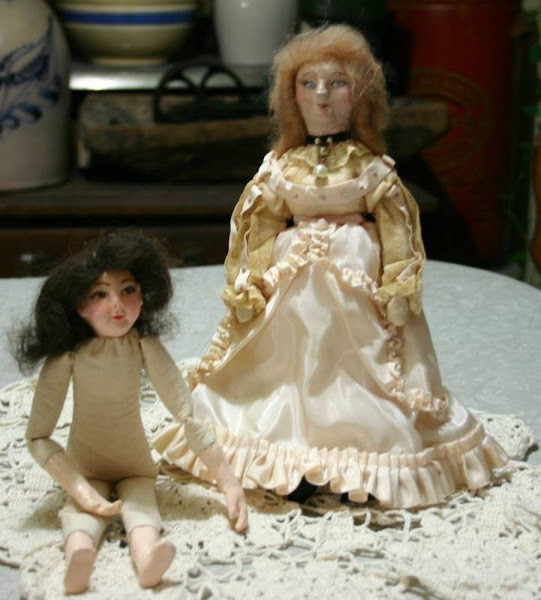






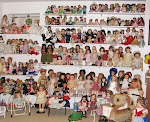
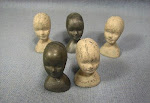


Good morning on a beautiful Midwest Monday. Easter is Sunday, and this year Eastern Orthodox Easter and what we call Protestant Easter are the same Sunday. This is good, too, but we lose out on Easter sales when they are the same day. I thought I would describe a few of my favorite dolls. I'd like to limit and say two, three, or four favorites, but that is nearly impossible. The older I get, the more challenged I am at counting, though I can figure percentages in my head.
1. Vogue's 1964 Baby Dear. She is about the size of a newborn. Her name is Candy, don't ask why, and I got her when I was five. In those days [September 1965], our big local department store began displaying Christmas dolls early. There was no Toys R Us or Walmart [it was really the Dark Ages!], and the department stores had amazing things. I remember getting hard plastic Nancy Anns in boxes, beautiful Vogue, Effanbee, and Madame Alexanders, every type of Barbie available, Tammy and Ideal dolls, Horsman, silk and stockinette Bradley ladies with outfits to die for, even some nice Shackman bisques and Sasha dolls. My parents took me to look at the dolls to choose the one I liked for Christmas. I got so emotionally swept up that Candy came home in September. She has never left. She has had many "surgeries" to refurbish her stuffing, and there is a crayon heart drawn on her chest. She has several wardrobes and warm blankets; when I was six or seven, I was admonished by a lady working in one of the stores we frequented for not dressing my "baby" in warmer clothes on a cold February day. Candy has been to graduate school, has crossed country several times, and will always be with me. I have several other versions of this doll in many sizes, skin tones, with wigs, from other manufacturers. I found severl Eloise Wilkin books go go with her. She is an endearing doll, and even Krutschev liked her. After he finished banging his shoe on the table at the UN, he bought several dolls like Candy to take home as gifts. Go figure.
2. Mousie. He is a stuffed animal, about 11 inches. He is a little gray mouse wearing a pink and white lace collar. His tale is a long piece of elastic with a little bell attached. He is Candy's faithful companion and has been since I got him for my seventh birthday. He appears in the birthday picture taken of me that year.
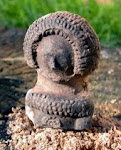
3. The Little Drummer Boy. He isn't really a doll, but an approximately 12.5" sculpture from the Sudan. He is playing a drum. He belonged to my Uncle George, who was only a few years older than I. He was the big brother I never had, and since he was the baby of his family, I think he enjoyed the role. I took TLDB everywhere, often without exactly getting express permission. Somewhere along the line, he injured a foot. My Uncle Tom, who was an artist, repaired it. In fact, Uncle Tom learned doll hospital work through practial experience and had many patients. When my mothers' family moved out west, George left The Little Drummer Boy with me. There is a photo of me holding the little statue, and wearing my Uncle George's mortar board from I thinkg high school. In college, he used to take me with him everyhwere, and read to me from history books about Elizabeth I. I was even invited on dates with him from time to time and hte taught me to love Peter, Paul and Mary and Petula Clark. Those were really more innocent days!
4. Joanna. She is a 3" Shackman reproduction parian. Her hair is blonde, her limbs porcelain. She wears a black band in her pulled back hair. Her full name is Joanna Plantaganet, per the family given my doll house dolls. Her dress is tiny black and white stripes with leg o'mutton sleeves. She appeared in my Christmas stocking when I was ten. I have obtained sisters for her since then wearing red stripes, also from Shackman, but they are not as dainty as Joanna.
5. Charlotte; you guessed it; she is a 2" or so Frozen Charlotte with arms outstretched. She has a tiny foot injury from too much love, but then I broke my foot, too, years ago. Art imitates life. She was my first antique doll; we bought her for the huge sum of $5.00 at the Women's Club Antique show when I was seven. That was my first antique show. My poor mother hated old things, but she adored me, and the dolls, so, off we used to go. My dad would drive, but usually stayed in the car reading Newsweek. I've been going to Antique Shows ever since, and as one dealer said to me, "You grew up with us."
6. Suzanne Gibson. She is one of the little porcelain girls made for Knotts Berry Farm. At the time, she was expensive, and I was surprised my Dad bought her. As he says, his hand still hurts from writing the check. Suzanne Gibson later became a friend and a penpal, and she emailed me a photo of one of my doll's sisters. These were my first introduction to porcelain dolls and to N.I.A.D.A dolls and I was entranced. That was a great trip; I was ten, and first saw Mott's Miniature Museum, then housed in Knotts. My mom found all kinds of miniature dolls and Shackman dolls on her rounds of the toys stores and gift shops. We still have and love all these dolls, including the wooden bodied mannikin dolls with the Goeble half-doll head and long blonde curls. Suzanne's doll is really one of my all time favorites.
7. 9.5" Barrois Fashion; she has a small hairline, but great provenance. I bought her from Jim Fernando and his business partner. They even found a French bag to put her in. I went running to the bank for the money when I saw her, and they turned her face around on the table. Still, everyone wanted to buy her in my absence! I've collected all sorts of little things for her over the years, but she needs a pair of original shoes to fit her. she is fragile, and doesn't travel to lectures anymore. Everyone who does see her loves her. I never thought I would have a real French Fashion, and got very excited with this one.
8. My "misfit" or distressed dolls. These are the odds and ends I made over the years. They live in a cardboard box, but are occasionally taken out, refurbished, and displayed. Many are "wax" dolls made from melted candles, others are Play Dough and clay varnished to last. I even have a couple versions of Joan of Arc, one dressed in tin foil armour, and dozens and dozens of paper dolls. My friends often contributed to the Misfits. One of them made me a doll from two pieces of a ruler. That "little girl" now lives two doors down, and I live in a house her sister once lived in. Serendipity.
9. My "angels and demons." I love Halloween, Christmas, all holidays and their decorations. I have some gruesome dolls and litte monsters as a result. My mother used to like to dress them, so that our Alien queen wears a tasteful red knitted sunddresss, and the two-heade demon baby wears a layette, hand crocheted. My skeletons all have lovely outfits, and the largest, Ophelia, has seasonal sweaters to wear over her bride's dress. Shs sings "White Wedding" and talks. She is about the size of a three year old. At first, little kids are a little afraid of her, but then they make friends. I also love my plush bunnies, treetop angels, carolers, and leprechauns. Even the doll houses get decorated, sometimes all at once.
I think that's enough favorites for now. I may add some nostalgia in future blogs and talk about sixties/seventies doll shopping, as well as some of the dolls that got away. Happy Dolling, Happy Easter, and a Blessed Passover as well.
Monday, March 29, 2010


Sunday, March 28, 2010
The Art of Blogging!
Slowly, but surely, I am seeing and learning how the blogging community works. Thanks to new followers, and welcome, and thanks for the kind comments and to all who have emailed. It is encouraging to hear from so many good writers and from people who are interested in dolls. Hardly anyone really knows about my collection any more, and in some ways, this can be a good thing. On the other hand, you feel a little bit out in the wilderness, and despite the popularity of this hobby, you still get funny looks at yard sales and the occasional antique show. C'est la guerre. Then again, I used to teach a class on dolls for CommUniversity, a local group of higher education organziations and colleges that teaches classes Sundays in February [www.communiversity.org]. When people came to my class, I was really surprised at the depth and interest in the subject.
Today I began organizing dolls and materials for the Girl Scouts program where we are going to make a Victorian fortune teller paper doll, and learn about the history of dolls. Little kids are great audiences; they are ready to share their own stories and inspire me as much as I hope I inspire them. With that in mind, I'd like to mention a couple books out there for kids that talk about collecting, and that they will enjoy and find fun.
1. Shari Lewis. Things Kids Collect. This is a slim paperback with chapters on doll collecting, coins, stamps, souvenirs, rocks, shells, etc. Almost anything a child might like is included. Of course, Shari Lewis is Lambchop's "mother." I was still watching Lambchop in graduate school at SIUC in the early and mid 90s. Shortly after, Shari Lewis died at a fairly young age. She had her own fantastic collection of dolls and puppets, and I don't know whatever happened to them.
2. Shirley Glubok's books about dolls and doll collecting for children are great. They cover all types of enthnic and antique dolls and also talk about how dolls relate to culture and history.
3. Tasha Tudor. A is for Annabelle and The Doll's Christmas. Tudor had her own fantastic dolls and doll house. She illustrated these two books with French Fashion dolls and old china heads and papier mache little girls. They are just great! About 20 years ago, I wrote Tudor a letter, and she answered me and drew a sketch of the dolls in The Doll's Christmas. I nearly melted with excitement.
4. Rumer Godden. Miss Happiness and Miss Flower, Home is the Sailor, Little Plum, Holly and Ivy, and The Doll's House. In honor of the latter, I named my main dollhouse family Plantaganet. Mr. and Mrs. Plantaganet were in two versions, a pair of East German rubber dolls, man and woman, in Dutch costume, or, an 8" Effanbee little boy baby doll in a red flannel suit and an 8" late composition late 40s Mexican doll with her mohair wig done up in braids on top of her head. [The N.A.M.E folks would hate me; I don't find scale all that thrilling. I like effect better in miniatures and doll houses]. Various other dolls made up the rest of the staff and family of Plantaganet house, including some homemade, rather pathetic examples I used to create. The dolls had lots of visitors, and even had stores and businesses, as well as a diary that chronicled the family history. The drama in the Tasha Tudor illustrated book is anything but childlike, but good certainly triumphs. Miss Happiness and Miss Flower and Little Plum are stories about ex patriated Japanese Dolls, and I loved reading them over and over. From them, I learned about the March 3d Japanese Doll Festival, and have tried to honor it and build Japanese doll houses ever since. Home is the Sailor is about several generations of a Victorian doll house that are much loved, and that have their own life dramas. The rest of my dolls were named Poppy and Miss Charlotte after that family. Any child would still be inspired by Godden's stories. I wrote to her in graduate school about her adult novels. She wrote a very long helpful letter, apologizing for answering late. She was in her late 80s at the time, and had just returned from Greece. She was another very talented and inspiring lady. Holly and Ivy has been made into a cartoon called, I think The Christmas Wish, and is a story about a lonely doll and a lonely little girl who find each other and become happy.
5. The Raggedy Ann Stories by Johnny Gruelle and other authors and illustrators. I never got enough of these stories, and loved acting them out with my own Anns and Andys. My third grade teacher liked dolls and used to read them to us. I began to believe there were candy cotton clouds and chocolate mud puddles, not to mention cookie trees. I also loved my Raggedy Ann coloring books which told stories as well, and my paper dolls and cards. My original Raggedy is one of my four all time favorite dolls that I would never part with. Then, what is it we say, they're all our favorites!
6. Another great story for kids is Floating Island by Anne Parrish, about a doll house family marooned on an island. It is a happy and exciting story of survival, sort of a Swiss Family Robinson for toys.
7. Missing Melinda, by Jacqueline Jackson. This is a great mystery story, first discovered in my grade school library, appropriately, Eugene Field School. Field, as we know, was another famous doll collector. Two sisters named for Shakespeare's Cordelia and Ophelia by their professor father must solve the mystery of a stolen Parian doll named Melinda, which they find in their attic but which is later stolen. They explore antique shops, thrift stores, and collector's houses, and meet the owner of a doll hospital who must have had Emma Clear as her prototype. I've read it over and over again, and never get tired of the endless array of dolls discussed. This was one of my first introductions to Shakespeare, as well, which was a good thing since I later taught him and wrote about him. I think the two sisters got me thinking.
These are wonderful stories, but they also get children interested in collecting. The Boy Scouts sell a very nice brochure about their own collecting badge, and there are other books including Miss Hickory, Hitty, The Doll People, The Little Wooden Doll, The Edith the Lonely Doll books, stories in the Little House Series, Jane Eyre, Miss Flora McFlimsey, and other stories about dolls and toys that kids would really enjoy. Amazon. com is great place to find them, as is Alibris. Happy Reading! Till we blog again.
Today I began organizing dolls and materials for the Girl Scouts program where we are going to make a Victorian fortune teller paper doll, and learn about the history of dolls. Little kids are great audiences; they are ready to share their own stories and inspire me as much as I hope I inspire them. With that in mind, I'd like to mention a couple books out there for kids that talk about collecting, and that they will enjoy and find fun.
1. Shari Lewis. Things Kids Collect. This is a slim paperback with chapters on doll collecting, coins, stamps, souvenirs, rocks, shells, etc. Almost anything a child might like is included. Of course, Shari Lewis is Lambchop's "mother." I was still watching Lambchop in graduate school at SIUC in the early and mid 90s. Shortly after, Shari Lewis died at a fairly young age. She had her own fantastic collection of dolls and puppets, and I don't know whatever happened to them.
2. Shirley Glubok's books about dolls and doll collecting for children are great. They cover all types of enthnic and antique dolls and also talk about how dolls relate to culture and history.
3. Tasha Tudor. A is for Annabelle and The Doll's Christmas. Tudor had her own fantastic dolls and doll house. She illustrated these two books with French Fashion dolls and old china heads and papier mache little girls. They are just great! About 20 years ago, I wrote Tudor a letter, and she answered me and drew a sketch of the dolls in The Doll's Christmas. I nearly melted with excitement.
4. Rumer Godden. Miss Happiness and Miss Flower, Home is the Sailor, Little Plum, Holly and Ivy, and The Doll's House. In honor of the latter, I named my main dollhouse family Plantaganet. Mr. and Mrs. Plantaganet were in two versions, a pair of East German rubber dolls, man and woman, in Dutch costume, or, an 8" Effanbee little boy baby doll in a red flannel suit and an 8" late composition late 40s Mexican doll with her mohair wig done up in braids on top of her head. [The N.A.M.E folks would hate me; I don't find scale all that thrilling. I like effect better in miniatures and doll houses]. Various other dolls made up the rest of the staff and family of Plantaganet house, including some homemade, rather pathetic examples I used to create. The dolls had lots of visitors, and even had stores and businesses, as well as a diary that chronicled the family history. The drama in the Tasha Tudor illustrated book is anything but childlike, but good certainly triumphs. Miss Happiness and Miss Flower and Little Plum are stories about ex patriated Japanese Dolls, and I loved reading them over and over. From them, I learned about the March 3d Japanese Doll Festival, and have tried to honor it and build Japanese doll houses ever since. Home is the Sailor is about several generations of a Victorian doll house that are much loved, and that have their own life dramas. The rest of my dolls were named Poppy and Miss Charlotte after that family. Any child would still be inspired by Godden's stories. I wrote to her in graduate school about her adult novels. She wrote a very long helpful letter, apologizing for answering late. She was in her late 80s at the time, and had just returned from Greece. She was another very talented and inspiring lady. Holly and Ivy has been made into a cartoon called, I think The Christmas Wish, and is a story about a lonely doll and a lonely little girl who find each other and become happy.
5. The Raggedy Ann Stories by Johnny Gruelle and other authors and illustrators. I never got enough of these stories, and loved acting them out with my own Anns and Andys. My third grade teacher liked dolls and used to read them to us. I began to believe there were candy cotton clouds and chocolate mud puddles, not to mention cookie trees. I also loved my Raggedy Ann coloring books which told stories as well, and my paper dolls and cards. My original Raggedy is one of my four all time favorite dolls that I would never part with. Then, what is it we say, they're all our favorites!
6. Another great story for kids is Floating Island by Anne Parrish, about a doll house family marooned on an island. It is a happy and exciting story of survival, sort of a Swiss Family Robinson for toys.
7. Missing Melinda, by Jacqueline Jackson. This is a great mystery story, first discovered in my grade school library, appropriately, Eugene Field School. Field, as we know, was another famous doll collector. Two sisters named for Shakespeare's Cordelia and Ophelia by their professor father must solve the mystery of a stolen Parian doll named Melinda, which they find in their attic but which is later stolen. They explore antique shops, thrift stores, and collector's houses, and meet the owner of a doll hospital who must have had Emma Clear as her prototype. I've read it over and over again, and never get tired of the endless array of dolls discussed. This was one of my first introductions to Shakespeare, as well, which was a good thing since I later taught him and wrote about him. I think the two sisters got me thinking.
These are wonderful stories, but they also get children interested in collecting. The Boy Scouts sell a very nice brochure about their own collecting badge, and there are other books including Miss Hickory, Hitty, The Doll People, The Little Wooden Doll, The Edith the Lonely Doll books, stories in the Little House Series, Jane Eyre, Miss Flora McFlimsey, and other stories about dolls and toys that kids would really enjoy. Amazon. com is great place to find them, as is Alibris. Happy Reading! Till we blog again.
Saturday, March 27, 2010
14 for Good Luck!
A quick greeting-I noticed I had 13 posts, and then had an awful time adding a photo. Thanks to the kind people from Dover for their free clip art edition. Hopefully, I can add more photos of my dolls.
Metal Heads and Musings
Today's blog is an excerpt from my book on Metal Dolls. I hope you enjoy it. I am still looking for clear photographs for this book, and you can email me at etsag1998@aol.com with photos and questions. eBay photos work nicely and are easy to mail. Also, include how you would like to be credited. Two sites I recommend for doll and toy enthusiasts are The Official Louvre Website and the Musee de la Poupee. There are links and activities for children and adults, and excellent displays in both on dolls. Each has a museum store, of course. The Louvre is easy to search; I put in the word "doll" and found all kinds of beautiful examples of painting and art but also example of Ancient Greek and Roman dolls, some articulated. It is easy to print and download these photos, and The Louvre is generous with printing and dowloading rights. The first time I saw these ancient playthings in the National Museum in Athens, and I cried. I had seen photos in my friend Mary's book, but these were just amazing in person. I cried to think of those little girls so long ago who must have loved them, and I cried because they were so beautiful and survived so much. Forgive me for not having figured out accents for the French words; I'm getting there. Also, I'm still not clear about including actual links, so for now, I will give titles and keywords of museums and websites that may be Googled. Enjoy the reading.
Chapter Five
Dolls With Metal Heads from Germany, America and Belgium
and France
The first metal dolls were manufactured in France and Germany. Heads, legs and hands were made of copper, zinc, brass, lead, tin, pewter or aluminum. metal dolls were made from 1860 to 1870.
Betty O. Bennett
Collectible Dolls: Facts and
Trivia. Volume One.
While the beautiful mechanical dolls discussed in the last two chapters often had heads made of delicate bisque, other dolls that did not move still had heads and/or bodies of metal. Dolls with metal heads have existed for a long time, but did not enjoy any popularity till the end of the nineteenth century. The three most famous trademarks were Juno, Minerva, and Diana. Karl Standfuss of Deuben bei Dresden made the Juno heads, which bear the crown mark. As early as 1880, German metal headed dolls may have appeared, though other collectors say that they were mass-produced in Germany by 1894 (Fawcett 213). Then, beginning in 1900, Standfuss made metal and celluloid dolls, heads and parts. One of the advantages of metal headed dolls was that one could push them back into shape if they were dented. Of course, doing so left chipped paint and other imperfections. Metal used for heads in the 1890's included brass, zinc and tin plate. The heads were mainly mass-produced in Germany. Those made in 1894 often had sawdust-filled bodies, glass or painted eyes, and natural or molded hair. Some fancy hairstyle metal heads appeared when elaborate bisque heads, the so-called "parian" dolls, were popular. Two of these dolls date from the 1870's and are made of pewter. They are from the late Gladys Hyls Hilsdorf collection and are considered quite rare. The heads have flowers molded into them and are set on wooden bodies.
Besides the Juno heads, there were many Minerva metal heads made at the end of the century. These heads, made by the firm of Buschow and Beck were made in Germany and sold in the United States through A. Vischer and Co., New York, NY. Several German heads, including some Minervas, were exhibited at the St. Louis Exhibition of 1904. Minerva dolls were advertised under different brand names, one of which was the "Wearwell Brand." This doll usually had a four-inch metal head with fixed, blue glass eyes. The head was marked "Minerva" across the front and "Germany/3" across the back. Sears Roebuck advertised these dolls in their toy catalog. AT one time, Minerva heads were so popular, that one Butler Brothers catalog equals the Minerva doll to the Kestner bisques, saying that "the Minerva doll enjoys a reputation equal to the Kestner brand of dolls." (Angione 167). Also during this time, Minerva heads were more expensive than bisque heads. For example, Minerva heads sold for $4.25 per dozen, while comparable bisque heads sold for $2.25 per dozen.
Furthermore, a 1903 Montgomery Wards catalog advertised Minerva heads from $.25 for a head of 2 5/8 inches to $.75 for a four-inch head. A four inch head was for sale for $45.00 at a recent doll show, held November 10, 1996 in Davenport, IA. The head had painted features and hair, and was in fair to good condition. Dolls with the added features of teeth and glass eyes sold for $.75 each to $1.75 for a head of 5 3/8 inches. Curly-haired doll heads cost $.50 to $.75 each. The same catalog advertised Minerva "Knockabout" dolls. These dolls were eleven inches long with silesia bodies and came without wigs. Janet Johl, in one of her books, describes an unusual Minerva with a wig, glass eyes and four "china teeth." (Johl SMAD 114). Another collector told Johl of a doll "either Minerva or Juno" marked "Made in Germany/D.R. Patent and England Pat./D.R.G.M." (Johl 114). "D.R.G.M." means "patent applied for." This doll was thirteen and one-half inches tall with molded/painted hair and a blue sateen dress which fit over a metal platform supported by four wheels. When activated, the doll turned around and around. A similar French doll that stands about 18 inches, with bisque head, glass eyes and teeth, and a long, metal skirt that covers a wheeled platform cost approximately $3000 at a doll show in Davenport, IA, November 10, 1996.
In 1912, Minerva advertised a doll that shed real tears. The author, however, has never seen one. Genevieve Angione shows and discusses in her book All Dolls are Collectible a boy marked with the Minerva mark. The head is six and three-fourths inches in circumference with a number "three" embossed on the back. The eyes are painted blue and have white highlights and red dots at the corners and nostrils. The ears are molded and slightly detached. The hair is brown, the body stuffed with hair. The boy's hands are chubby and bisque.
Currently, metal headed dolls bring a variety of prices. The author has seen a badly rusted and corroded, four-inch head without the inset eyes for $68.00. A three-inch example of the same type of head, but with fair condition cost $20.00 in 1988. Entire dolls bring anywhere between $28.00 and $400.00 in very good condition. For example, a sixteen-inch metal head on a cloth or kid body with bisque or composition hands, dressed and in very good condition sells for $135.00 (Foulke 288). Most complete dolls seem to be priced in the $75.00 - $125.00 range. A mint doll, fourteen and one-half inches high, with inset blue glass eyes, original wig and kid body was advertised in a 1988 issue of Doll Reader for $225.00. A similar, thirty-inch Minerva example sold for $300.00. One cannot help but compare these prices to the original ones. For example the Minerva "Little Rosebud" advertising doll cost $.25 with several sales of subscriptions of the Youth's Companion in 1911. With the doll came a set of paper patterns for outfits like middy suit, tam o'shanter and French dress. After selling more subscriptions, one could get a folding basket and dressing set which included among other things, a comb, powder box, mirror and toothbrush (Simonelli 46).
Of course, other companies besides Minerva were making metal dolls at various times. One twenty-three inch doll with a metal shoulder head has a wig, open mouth and sleeping eyes. The doll is marked "Germany 15." A similar doll with a closed mouth and no marks is thirteen-inches high (Schroeder 88). A metal headed boy has no marks and painted features. His body is cloth with bisque arms and leather legs. An R. H. Macy catalog of the early 1900's describes a "Diana" metal head as unbreakable with moving eyes and a wig. The head came in eight sizes and cost between $.44 and $1.39 (Simonelli 46). The Diana head is rare. According to Johl, a constant supply of metal heads for Europe was replacing fancy bisques and china heads (151).
American companies, too, made metal heads. The Metal Doll Company, which was run by Vincent Lake, made an all-metal jointed doll with interchangeable wigs. Lake was an inventor from Pleasantville, New Jersey. In 1899, he had patented a new typographic machine and had great hopes for his new invention. According to Miriam Formanek-Brunell in Made to Play House: Dolls and the Commercialization of American Girlhood 1830-1930, Lake's excitement was short lived. The Linotype came along and rendered his brainchild obsolete (35). Apparently disappointed and jaded by what Formanek-Brunell calls "the masculine world of printing," Lake invented the all steel doll, complete with steel springs. Formanek-Burnell, whose book places a feminist slant on the doll manufacturing industry, calls the doll the "epitome of the American male world of business and production from which he came" (36). In fact, Formanek-Burnell observes that by the turn of the century, "men with origins as diverse as carriage manufacturers and typesetters would end up as doll manufacturer," placing their knowledge of making everything from pulley-belts and carriages to clocks and various machines to use in making dolls (36). In fact, many companies at this time were involved in the mass production of dolls and toys, and many of these were made of metal.
The Metal Stamping company made walking metal figures of various kinds. An old soldier in the author's collection is similar to these. He stands eleven-inches high and is all metal. His arms are jointed, when key-wound, he plays a metal drum. Though badly rusted, the doll's painted features are still visible. A smaller example of the same doll stands seven-inches high. Metal Frozen Charlotte type dolls regularly appeared in Crackerjack boxes as prizes. One such doll in the author's collection is attached to a baby announcement card along with a metal stork. It dates from the 1880's. A very unusual, all metal baby doll was made by the Atlas Doll Co., between 1917-30. Heads from this company are generally unmarked. Atlas had its location in Baltimore, MD and produced about sixty-five types of dolls in 1921. The baby doll was modelled after the bent-legged bisque headed babies of the era. According to Lauren Jaeger in "Identifying Your Dolls," Doll World, Oct. 1993, Atlas and other American companies entered the doll marked during World War I to fill a need for dolls (12). Ms. Jaeger values an Atlas baby doll at $50.00 (12). Other unusual metal dolls represented young girls or baby. At the Lasalle-Peru doll show, held October 13, 1996, the author saw three interesting heads at the following prices. A girl's head, six-inches high, with blue sleep eyes and painted, "flapper" type black hair in fair condition was $45.00. Baby or toddler's head, no wig, with sleep eyes, fair condition , was also $45.00. A complete baby doll, about 18 inches high, with sleep eyes and old clothing, in good to fair condition cost $110.00.
The author has a metal girl in her collection that is about seventeen-inches high. The doll's body is cloth, her limbs composition. The hair is molded in a bob style with a molded
loop for a ribbon. The original dress is of a taffeta, the print faded to a lavender color. The paint and features are in good shape, though the doll was a good price at $75.00. Dolls of this type are usually valued at $200.00 or more.
Perhaps the most famous American metal head, however, is the Giebeler Falk doll by the Giebeler Falk Doll Company of New York. In 1919, the company took a patent, No. 18,550, for making dolls, outfits and parts. One of the marks on the dolls is "Gie-Fa" with the Star of David. The doll may also be marked with "G" inside a Star of David with "U.S. Pat." underneath. The doll came in sixteen, eighteen, twenty, twenty-two and twenty-five-inch sizes. These heads are made of heavy gauge aluminum and appeared during the latter years of World War I. They had sleeping eyes of metal attached tot he head with five washers. A nut and bolt secured these to adjust the swing of the eye weight. The hands, feet and head were coated with baked-on enamel and the body was of lathe-turned wood and fully-jointed. In the author's opinion, these are among the loveliest of the metal heads and closely resemble the bisque heads of the era. The author is lucky enough to have a
Giebeler-Falk head in her collection, though the wig, body and dress are replacements. In 1919, Gibeler also make a phonograph doll. The doll's crown was hinged and inside was the horn and turntable for the phonograph. The mechanism was in the doll's body and the crank was in the back.
Chapter Five
Dolls With Metal Heads from Germany, America and Belgium
and France
The first metal dolls were manufactured in France and Germany. Heads, legs and hands were made of copper, zinc, brass, lead, tin, pewter or aluminum. metal dolls were made from 1860 to 1870.
Betty O. Bennett
Collectible Dolls: Facts and
Trivia. Volume One.
While the beautiful mechanical dolls discussed in the last two chapters often had heads made of delicate bisque, other dolls that did not move still had heads and/or bodies of metal. Dolls with metal heads have existed for a long time, but did not enjoy any popularity till the end of the nineteenth century. The three most famous trademarks were Juno, Minerva, and Diana. Karl Standfuss of Deuben bei Dresden made the Juno heads, which bear the crown mark. As early as 1880, German metal headed dolls may have appeared, though other collectors say that they were mass-produced in Germany by 1894 (Fawcett 213). Then, beginning in 1900, Standfuss made metal and celluloid dolls, heads and parts. One of the advantages of metal headed dolls was that one could push them back into shape if they were dented. Of course, doing so left chipped paint and other imperfections. Metal used for heads in the 1890's included brass, zinc and tin plate. The heads were mainly mass-produced in Germany. Those made in 1894 often had sawdust-filled bodies, glass or painted eyes, and natural or molded hair. Some fancy hairstyle metal heads appeared when elaborate bisque heads, the so-called "parian" dolls, were popular. Two of these dolls date from the 1870's and are made of pewter. They are from the late Gladys Hyls Hilsdorf collection and are considered quite rare. The heads have flowers molded into them and are set on wooden bodies.
Besides the Juno heads, there were many Minerva metal heads made at the end of the century. These heads, made by the firm of Buschow and Beck were made in Germany and sold in the United States through A. Vischer and Co., New York, NY. Several German heads, including some Minervas, were exhibited at the St. Louis Exhibition of 1904. Minerva dolls were advertised under different brand names, one of which was the "Wearwell Brand." This doll usually had a four-inch metal head with fixed, blue glass eyes. The head was marked "Minerva" across the front and "Germany/3" across the back. Sears Roebuck advertised these dolls in their toy catalog. AT one time, Minerva heads were so popular, that one Butler Brothers catalog equals the Minerva doll to the Kestner bisques, saying that "the Minerva doll enjoys a reputation equal to the Kestner brand of dolls." (Angione 167). Also during this time, Minerva heads were more expensive than bisque heads. For example, Minerva heads sold for $4.25 per dozen, while comparable bisque heads sold for $2.25 per dozen.
Furthermore, a 1903 Montgomery Wards catalog advertised Minerva heads from $.25 for a head of 2 5/8 inches to $.75 for a four-inch head. A four inch head was for sale for $45.00 at a recent doll show, held November 10, 1996 in Davenport, IA. The head had painted features and hair, and was in fair to good condition. Dolls with the added features of teeth and glass eyes sold for $.75 each to $1.75 for a head of 5 3/8 inches. Curly-haired doll heads cost $.50 to $.75 each. The same catalog advertised Minerva "Knockabout" dolls. These dolls were eleven inches long with silesia bodies and came without wigs. Janet Johl, in one of her books, describes an unusual Minerva with a wig, glass eyes and four "china teeth." (Johl SMAD 114). Another collector told Johl of a doll "either Minerva or Juno" marked "Made in Germany/D.R. Patent and England Pat./D.R.G.M." (Johl 114). "D.R.G.M." means "patent applied for." This doll was thirteen and one-half inches tall with molded/painted hair and a blue sateen dress which fit over a metal platform supported by four wheels. When activated, the doll turned around and around. A similar French doll that stands about 18 inches, with bisque head, glass eyes and teeth, and a long, metal skirt that covers a wheeled platform cost approximately $3000 at a doll show in Davenport, IA, November 10, 1996.
In 1912, Minerva advertised a doll that shed real tears. The author, however, has never seen one. Genevieve Angione shows and discusses in her book All Dolls are Collectible a boy marked with the Minerva mark. The head is six and three-fourths inches in circumference with a number "three" embossed on the back. The eyes are painted blue and have white highlights and red dots at the corners and nostrils. The ears are molded and slightly detached. The hair is brown, the body stuffed with hair. The boy's hands are chubby and bisque.
Currently, metal headed dolls bring a variety of prices. The author has seen a badly rusted and corroded, four-inch head without the inset eyes for $68.00. A three-inch example of the same type of head, but with fair condition cost $20.00 in 1988. Entire dolls bring anywhere between $28.00 and $400.00 in very good condition. For example, a sixteen-inch metal head on a cloth or kid body with bisque or composition hands, dressed and in very good condition sells for $135.00 (Foulke 288). Most complete dolls seem to be priced in the $75.00 - $125.00 range. A mint doll, fourteen and one-half inches high, with inset blue glass eyes, original wig and kid body was advertised in a 1988 issue of Doll Reader for $225.00. A similar, thirty-inch Minerva example sold for $300.00. One cannot help but compare these prices to the original ones. For example the Minerva "Little Rosebud" advertising doll cost $.25 with several sales of subscriptions of the Youth's Companion in 1911. With the doll came a set of paper patterns for outfits like middy suit, tam o'shanter and French dress. After selling more subscriptions, one could get a folding basket and dressing set which included among other things, a comb, powder box, mirror and toothbrush (Simonelli 46).
Of course, other companies besides Minerva were making metal dolls at various times. One twenty-three inch doll with a metal shoulder head has a wig, open mouth and sleeping eyes. The doll is marked "Germany 15." A similar doll with a closed mouth and no marks is thirteen-inches high (Schroeder 88). A metal headed boy has no marks and painted features. His body is cloth with bisque arms and leather legs. An R. H. Macy catalog of the early 1900's describes a "Diana" metal head as unbreakable with moving eyes and a wig. The head came in eight sizes and cost between $.44 and $1.39 (Simonelli 46). The Diana head is rare. According to Johl, a constant supply of metal heads for Europe was replacing fancy bisques and china heads (151).
American companies, too, made metal heads. The Metal Doll Company, which was run by Vincent Lake, made an all-metal jointed doll with interchangeable wigs. Lake was an inventor from Pleasantville, New Jersey. In 1899, he had patented a new typographic machine and had great hopes for his new invention. According to Miriam Formanek-Brunell in Made to Play House: Dolls and the Commercialization of American Girlhood 1830-1930, Lake's excitement was short lived. The Linotype came along and rendered his brainchild obsolete (35). Apparently disappointed and jaded by what Formanek-Brunell calls "the masculine world of printing," Lake invented the all steel doll, complete with steel springs. Formanek-Burnell, whose book places a feminist slant on the doll manufacturing industry, calls the doll the "epitome of the American male world of business and production from which he came" (36). In fact, Formanek-Burnell observes that by the turn of the century, "men with origins as diverse as carriage manufacturers and typesetters would end up as doll manufacturer," placing their knowledge of making everything from pulley-belts and carriages to clocks and various machines to use in making dolls (36). In fact, many companies at this time were involved in the mass production of dolls and toys, and many of these were made of metal.
The Metal Stamping company made walking metal figures of various kinds. An old soldier in the author's collection is similar to these. He stands eleven-inches high and is all metal. His arms are jointed, when key-wound, he plays a metal drum. Though badly rusted, the doll's painted features are still visible. A smaller example of the same doll stands seven-inches high. Metal Frozen Charlotte type dolls regularly appeared in Crackerjack boxes as prizes. One such doll in the author's collection is attached to a baby announcement card along with a metal stork. It dates from the 1880's. A very unusual, all metal baby doll was made by the Atlas Doll Co., between 1917-30. Heads from this company are generally unmarked. Atlas had its location in Baltimore, MD and produced about sixty-five types of dolls in 1921. The baby doll was modelled after the bent-legged bisque headed babies of the era. According to Lauren Jaeger in "Identifying Your Dolls," Doll World, Oct. 1993, Atlas and other American companies entered the doll marked during World War I to fill a need for dolls (12). Ms. Jaeger values an Atlas baby doll at $50.00 (12). Other unusual metal dolls represented young girls or baby. At the Lasalle-Peru doll show, held October 13, 1996, the author saw three interesting heads at the following prices. A girl's head, six-inches high, with blue sleep eyes and painted, "flapper" type black hair in fair condition was $45.00. Baby or toddler's head, no wig, with sleep eyes, fair condition , was also $45.00. A complete baby doll, about 18 inches high, with sleep eyes and old clothing, in good to fair condition cost $110.00.
The author has a metal girl in her collection that is about seventeen-inches high. The doll's body is cloth, her limbs composition. The hair is molded in a bob style with a molded
loop for a ribbon. The original dress is of a taffeta, the print faded to a lavender color. The paint and features are in good shape, though the doll was a good price at $75.00. Dolls of this type are usually valued at $200.00 or more.
Perhaps the most famous American metal head, however, is the Giebeler Falk doll by the Giebeler Falk Doll Company of New York. In 1919, the company took a patent, No. 18,550, for making dolls, outfits and parts. One of the marks on the dolls is "Gie-Fa" with the Star of David. The doll may also be marked with "G" inside a Star of David with "U.S. Pat." underneath. The doll came in sixteen, eighteen, twenty, twenty-two and twenty-five-inch sizes. These heads are made of heavy gauge aluminum and appeared during the latter years of World War I. They had sleeping eyes of metal attached tot he head with five washers. A nut and bolt secured these to adjust the swing of the eye weight. The hands, feet and head were coated with baked-on enamel and the body was of lathe-turned wood and fully-jointed. In the author's opinion, these are among the loveliest of the metal heads and closely resemble the bisque heads of the era. The author is lucky enough to have a
Giebeler-Falk head in her collection, though the wig, body and dress are replacements. In 1919, Gibeler also make a phonograph doll. The doll's crown was hinged and inside was the horn and turntable for the phonograph. The mechanism was in the doll's body and the crank was in the back.
Friday, March 26, 2010
Publishing Update and Literary Doll III
Today is another crisp and deceptively cool day. Late at night, with my garage light flashing on and off with the motion detector, I worked on spring/Easter terrariums with Bunny Houses and small rabbit figures. I plan to spend the rest of the weekend working on my death penalty textbook. Talk about opposites! Then, there was Elmer F. and "Kill the Wabbit!"
Enough hilarity, especially bad hilarity. I was at the publisher yesterday and the appearance of the doll bibliography is becoming reality. I am getting anxious to see it. I am going to finish the paper doll houses for the book fair this weekend. On the subject of books and doll related items, Target has in its dollar section all types of Beatrix Potter themed items. There are small board books of "The Tale of Peter Rabbit" and "The Tale of Benjaimin" Bunny, and all kinds of stickers, small notebooks featuring Jemima Puddleduck, and graphics with Tom Kitten. They are all $1.00. There is a very nice sticker album with the stickers, too.
Barbie Basics has been restocked at Target as well. For those who love fashions, this is a series of nice dolls, all Barbie and friends, wearing the iconic "little black dress." There are also available accessory packs that are very nicely detailed, with gloves, purses, shoes, jewelry, etc. All are in perfect scale, of course, andI can see lots of projects taking place. For anyone interested in chronicling contemporary fashion, this is it.
Some more books that I would recommend include:
1. Books, cards, calendars by Tom Kelley. His son was also running a website. Kelley was the photographer who first took pictures of Marilyn Monroe. She was so young and new, that he legend claims he actually had to loan her some money. He migrated later in life to photgraphing antique dolls, especially gorgeous French bebes. For doll historians, fashionistas, and photography buffs, especially in portrait, you can't beat him.
2. Manfred Bachman, Dolls the Wide World Over. Bachman is another author who enjoys linking dolls with history, culture, art, and sociology. He talks about doll-shaped buildings and does photo studies of doll faces from every aspect of collecting, so that a modern vinyl baby's photo might appear between photos of Queen Anne woodens, Native American Kachinas, or Delicate French bisques. There are ritual dolls,tourist dolls, ethnic dolls, antiques, modern dolls, and creche figures galore, and the book is a fun read besides.
3. Helen Young, The Complete book of Doll Collecting. c. 1967. A fun surprise with this book is that when one takes off the wonderful dustcover with its antique dolls, the blue cloth bound book is decorated with a border of gold-gilt paper dolls dancing across the front cover. Young was also an artist and has done books for young collectors and books on dollmaking. Her dolls appeared for sale in Doll News, long published by Kimport dolls. She has an excellent section on N.I.A.D.A artists and tells stories and histories of dolls that I have used even in my Death Penatly Graduate Workshop. She gives tips on doll repair and collecting philosophy. She also has included in its entirety "The Ballad of Frozen Charlotte." I love how she thinks, and have followed her advice to have a good, varied collection. To complete it, Young thinks outside the box. For example, if wax dolls are too expensive or not easy to find, she recommends that one find some good figural candles, like those I grew up with that represented Christmas carolers or pilgrims. She suggested nice folk carvings or ornaments could fill in wear wooden dolls might be lacking. As always, she recommends collecting what we like, but cautions against "accumulations" of too many of the same type of doll. She mentions a collections of large bisque dolls that she viewed, that were no doubt expensive, but that all looked alike, were about the same height, had similar clothes, were from the same era, etc. For those of us who love variety, Young's philosophy is our mantra.
4. Dolls at 2000; comprehensive doll history by the U.F.D.C. This is a wonderful book that covers all types of dolls, and includes authors like Maria Argyriadis of the Benaki Museum that we never hear from otherwise. It is an excellent book for photo study and for tracking doll history. For Researchers, it is terrific.
That's the doll news for today. Hope you enjoy it. I'm interested to hear from readers. I will discuss a couple more books, and maybe begin to talk about favorite websites in blogs to come. I'm also interested in information on the following subjects:
1. Biographical information on Carl Fox and Max von Boehn.
2. The current whereabouts of the Metal Headed Huret doll, or the location of other dolls.
3. Information linking German or European dollmakers to the Holocaust.
Take care, and have a wonderful weekend.
Enough hilarity, especially bad hilarity. I was at the publisher yesterday and the appearance of the doll bibliography is becoming reality. I am getting anxious to see it. I am going to finish the paper doll houses for the book fair this weekend. On the subject of books and doll related items, Target has in its dollar section all types of Beatrix Potter themed items. There are small board books of "The Tale of Peter Rabbit" and "The Tale of Benjaimin" Bunny, and all kinds of stickers, small notebooks featuring Jemima Puddleduck, and graphics with Tom Kitten. They are all $1.00. There is a very nice sticker album with the stickers, too.
Barbie Basics has been restocked at Target as well. For those who love fashions, this is a series of nice dolls, all Barbie and friends, wearing the iconic "little black dress." There are also available accessory packs that are very nicely detailed, with gloves, purses, shoes, jewelry, etc. All are in perfect scale, of course, andI can see lots of projects taking place. For anyone interested in chronicling contemporary fashion, this is it.
Some more books that I would recommend include:
1. Books, cards, calendars by Tom Kelley. His son was also running a website. Kelley was the photographer who first took pictures of Marilyn Monroe. She was so young and new, that he legend claims he actually had to loan her some money. He migrated later in life to photgraphing antique dolls, especially gorgeous French bebes. For doll historians, fashionistas, and photography buffs, especially in portrait, you can't beat him.
2. Manfred Bachman, Dolls the Wide World Over. Bachman is another author who enjoys linking dolls with history, culture, art, and sociology. He talks about doll-shaped buildings and does photo studies of doll faces from every aspect of collecting, so that a modern vinyl baby's photo might appear between photos of Queen Anne woodens, Native American Kachinas, or Delicate French bisques. There are ritual dolls,tourist dolls, ethnic dolls, antiques, modern dolls, and creche figures galore, and the book is a fun read besides.
3. Helen Young, The Complete book of Doll Collecting. c. 1967. A fun surprise with this book is that when one takes off the wonderful dustcover with its antique dolls, the blue cloth bound book is decorated with a border of gold-gilt paper dolls dancing across the front cover. Young was also an artist and has done books for young collectors and books on dollmaking. Her dolls appeared for sale in Doll News, long published by Kimport dolls. She has an excellent section on N.I.A.D.A artists and tells stories and histories of dolls that I have used even in my Death Penatly Graduate Workshop. She gives tips on doll repair and collecting philosophy. She also has included in its entirety "The Ballad of Frozen Charlotte." I love how she thinks, and have followed her advice to have a good, varied collection. To complete it, Young thinks outside the box. For example, if wax dolls are too expensive or not easy to find, she recommends that one find some good figural candles, like those I grew up with that represented Christmas carolers or pilgrims. She suggested nice folk carvings or ornaments could fill in wear wooden dolls might be lacking. As always, she recommends collecting what we like, but cautions against "accumulations" of too many of the same type of doll. She mentions a collections of large bisque dolls that she viewed, that were no doubt expensive, but that all looked alike, were about the same height, had similar clothes, were from the same era, etc. For those of us who love variety, Young's philosophy is our mantra.
4. Dolls at 2000; comprehensive doll history by the U.F.D.C. This is a wonderful book that covers all types of dolls, and includes authors like Maria Argyriadis of the Benaki Museum that we never hear from otherwise. It is an excellent book for photo study and for tracking doll history. For Researchers, it is terrific.
That's the doll news for today. Hope you enjoy it. I'm interested to hear from readers. I will discuss a couple more books, and maybe begin to talk about favorite websites in blogs to come. I'm also interested in information on the following subjects:
1. Biographical information on Carl Fox and Max von Boehn.
2. The current whereabouts of the Metal Headed Huret doll, or the location of other dolls.
3. Information linking German or European dollmakers to the Holocaust.
Take care, and have a wonderful weekend.
Thursday, March 25, 2010
The Literary Doll II
Here we are again. It is cool and a little overcast, but I see buds on my daffodils. I love to plant, and am eager to get my pots out. We've survived another hard week, and I'm looking forward to another blog. Remember, though; if I could spell, I'd be dangerous.
Here are a few more favorite books chosen from the 150+ pages of bibliography I compiled. I would like to do another blog with artists who used dolls, especially, Jarvis Rockwell, David Levinthal, Hans Belmer, and my favorite, Joseph Cornell. Here goes the list:
1. Any book by Lesley Gorden. She was an art student who wrote about dolls and doll collecting and who illustrated her books with her own watercolors and sketches. My friend Mary H. knew her, and visited her later in life when Lesley was living in a rest home. Even in later years, she occupied herself creating beautiful pictures from collages of dried flowers. The dolls described in her book were a veritable feast of variety for any doll lover. She talked about ancient dolls in museums, and many foreign dolls. It was in her books that I first read about the dressed Mexican fleas I'm trying so hard to find, and about the relationship between dolls and doll related objects like Cigar Store statues, ships' figureheads, scarecrows, even the old Little Midshipman that was the mascot for Holiday Inn. She is easy to read, and a good place for children interested in collecting to start. [With kid in mind, I recommend Shari Lewis' Things Kids Collect and any vintage issues of her magazine Doll Stars, published for children collectors in the late 80s].
2. Dolls, or Dolls and Puppets, by Max von Boehn, Dover. Orignally published 1927. For historians, there is simply no other book. Von Boehn, who like Carl Fox, was apparently a museum curator, leaves no stone unturned. There are chapters on ancient dolls, prehistoric figures, ritual and religious figures, doll shaped utensils, figurines, porcelains, toys, art objects, miniatures, etc. He talks of Santos, and even of a doll or human shaped bee hive! His section on mechanical dolls and automatons is excellent, as are his discussions of toy soldiers. In his book I first learned of The Venus of Willendorf, allegedly the first "doll" and oldest representation of the human figure and human artifact. Artists, doll lovers, teachers, collectors, and historians love his book. He has also written on 19th century manners and fashions. I would recommmend him to anyone interested in the subject.
3. Kay Desmonde, All Color Book of Dolls. This is a very pleasing book from a very knowledgeable dealer and collector with an enviable collection. The dolls are arranged skillfully in appropriate tableau with appropriate furniture. Again, young collectors would really enjoy the beautiful photographs, but so would an experienced collector. I used to like to Xerox the photos or sketch them, and make my own elaborate dolls and paper dolls from the pictures.
4. All books by Clara Hallard Fawcett. Fawcett, like Gordon, was an artist. She used her own sketches to illustrate her reference and pattern books. She knew the great collectors of the 40s, 50s, and 60s well, and reading books by her, Eleanor St. George, and Janet Pagter Johl is like reading the minutes of a happy neighborhood coffe klatch. Fawcett is knowledgeable about costume and dolls. Her patterns and designs work very well. I tried many when I was still in junior high and high school, yet they turned out well and were easy to follow. Her book Dolls: A New Guide for Collectors, features many rare dolls including a live sized Bru mannikin standing next to her owner's son. Fascinating stuff and a glimpse into a post-War, Utopia like world, that no longer exists in either innocence or experience.
That's all for today. I must run, but will continue with more books and materials tomorrow. As time progresses, I will include a few links and some book lists without so much commentary! I also have my own compiled guide for buying books which I will copy and paste in excerpts. Till we write again! A good day to all!
Here are a few more favorite books chosen from the 150+ pages of bibliography I compiled. I would like to do another blog with artists who used dolls, especially, Jarvis Rockwell, David Levinthal, Hans Belmer, and my favorite, Joseph Cornell. Here goes the list:
1. Any book by Lesley Gorden. She was an art student who wrote about dolls and doll collecting and who illustrated her books with her own watercolors and sketches. My friend Mary H. knew her, and visited her later in life when Lesley was living in a rest home. Even in later years, she occupied herself creating beautiful pictures from collages of dried flowers. The dolls described in her book were a veritable feast of variety for any doll lover. She talked about ancient dolls in museums, and many foreign dolls. It was in her books that I first read about the dressed Mexican fleas I'm trying so hard to find, and about the relationship between dolls and doll related objects like Cigar Store statues, ships' figureheads, scarecrows, even the old Little Midshipman that was the mascot for Holiday Inn. She is easy to read, and a good place for children interested in collecting to start. [With kid in mind, I recommend Shari Lewis' Things Kids Collect and any vintage issues of her magazine Doll Stars, published for children collectors in the late 80s].
2. Dolls, or Dolls and Puppets, by Max von Boehn, Dover. Orignally published 1927. For historians, there is simply no other book. Von Boehn, who like Carl Fox, was apparently a museum curator, leaves no stone unturned. There are chapters on ancient dolls, prehistoric figures, ritual and religious figures, doll shaped utensils, figurines, porcelains, toys, art objects, miniatures, etc. He talks of Santos, and even of a doll or human shaped bee hive! His section on mechanical dolls and automatons is excellent, as are his discussions of toy soldiers. In his book I first learned of The Venus of Willendorf, allegedly the first "doll" and oldest representation of the human figure and human artifact. Artists, doll lovers, teachers, collectors, and historians love his book. He has also written on 19th century manners and fashions. I would recommmend him to anyone interested in the subject.
3. Kay Desmonde, All Color Book of Dolls. This is a very pleasing book from a very knowledgeable dealer and collector with an enviable collection. The dolls are arranged skillfully in appropriate tableau with appropriate furniture. Again, young collectors would really enjoy the beautiful photographs, but so would an experienced collector. I used to like to Xerox the photos or sketch them, and make my own elaborate dolls and paper dolls from the pictures.
4. All books by Clara Hallard Fawcett. Fawcett, like Gordon, was an artist. She used her own sketches to illustrate her reference and pattern books. She knew the great collectors of the 40s, 50s, and 60s well, and reading books by her, Eleanor St. George, and Janet Pagter Johl is like reading the minutes of a happy neighborhood coffe klatch. Fawcett is knowledgeable about costume and dolls. Her patterns and designs work very well. I tried many when I was still in junior high and high school, yet they turned out well and were easy to follow. Her book Dolls: A New Guide for Collectors, features many rare dolls including a live sized Bru mannikin standing next to her owner's son. Fascinating stuff and a glimpse into a post-War, Utopia like world, that no longer exists in either innocence or experience.
That's all for today. I must run, but will continue with more books and materials tomorrow. As time progresses, I will include a few links and some book lists without so much commentary! I also have my own compiled guide for buying books which I will copy and paste in excerpts. Till we write again! A good day to all!
Wednesday, March 24, 2010
The Literary Doll (and Collector!)
The Literary Doll (and Collector!)
Once we decide which dolls we want in our collections, we should know something about them. Besides, who doesn't like to read about the things they love most? I'm going to discuss informally a few of my favorites by author and title. There are complete listings in my bibliography, but there are probably many other books out there people will love, too. I'm interested in hearing about them. One reason I want a museum is that I want to share all my books and library resources about dolls, collecting, and related subjects with everyone and anyone who is interested in them. Here goes:
1. Dolls by John Noble. I apologize in advance for not being yet familiar with where bold and italic keys are! My mother gave me this book at my seventh birthday party. I read it from cover to cover, though it took some time. It was really the first "blue" book. John Noble delights me with descriptions of every type of antique doll conceivable. He has great tips for collecting, and clear photos. The cover is graced by a beautiful French bisque Parisienne, and his style alone is wonderful and mesmerizing. So what if I pronounced "bisque" as "bis-cue!" when I was seven and had to have a snotty shopgirl correct me? I became a life-long fan. One of my regrets is that Dolls magazine editor Krystina Goddu would not forward a letter I wrote to him when I began researching my book on metal dolls. Noble used to write a column for Dolls and other magazines. Years ago, in the late 80s, The Internet simply was not accessible. The research my old college library did with a modum was not very satisfying. I had to track people down through magazines and Contemporary Authors. I made some life long friendships this way, but it is cumbersome. Anyway, this is a wonderful first book for collectors.
2. Dolls and Doll Makers by Mary Hillier. I received this book when I was nine for Christmas. I had nearly drooled over it in the old Petersen's department store in our downtown. In those days, department stores included books, notions, needlework and crafts, toys, and furniture. It was really an adventure to browse through them, and it was safe to let a nine year old skim through a book while you tried on clothes nearby. The color prints are fantastic, and some of the most unusual dolls and figurines I've ever seen are in this book. The selected bibliography is very helpful. For me, the best part was that many years later, I wrote to Mary Hillier. We became good penpals and she was a wonderful editor for me. Her entire family read my manuscripts, including my dissertation, which in later form became a book about Barbara Pym. Mary and I exchanged about two letters per month for nearly 14 years until her death in 1999. I still miss her and think of her everyday. She was truly "forever" young and had a lot of common sense and knowledge. She was curious about everything, dolls, games, sports, politics, anthropology, and art. She sued to give me little Internet assignments for her and for her husband Jack, and I would find articles and information for her. Her last gift to me was a guidebook of England. Her knowledge of dolls is unequaled, and I could not have written my metal doll book without her. I used to use her open book and John Noble's open book, as backdrops for doll houses and for Barbie settings. My friends and I really appreciated the terrific graphics, and are dolls had the best apartments around.
3. R. Lane Herron's Price Guide to Dolls and the numerous articles he has written for doll and antique magazines. Mr. Herron writes in an easy to read style, and is full of knowledge on all types of dolls. He was acquainted with many early collectors and with actors who collected dolls. No one knows the hobby in all its aspects like he does. His early text, Much Ado about Dolls is beautiful and inspires the novice and advanced collector alike. He is also a very talented doll artist and writer in other fields.
4. Genevieve Angione, All Dolls are Collectible. Again, Ms. Angione is a writer in her own class. She displays super rare dolls like the all china jointed "frozen Charlotte," and discusses why all dolls are important to some collectors. There are many photographs, but there is also informative text.
5. Carl Fox, The Doll. Shorter and complete edition with plates. 1970. This book made "In the News" with Christopher Glenn when it first came out. Fox's introduction alone is mesmerizing, as he draws connections among The Golem, early film, art, dolls, and cultural anthropology. His stories of legendary and fantastic collections lurking behind ordinary brownstones and facades in New York are captivating. He was my first introduction to the fantastic world of my muse, Margaret Woodbury Strong, and to The New York Doll Hospital, which closed last year.
6. Kagan and Joseph, Who won Second Place in Omaha? This is a text and photo essay of haunting black and white pictures about the legendary collection of Lenon Hoyte, owner/curator of the late, great Aunt Len's Doll Museum. This is one of the few records left of the dolls in this wonderful, eclectic collection. Bus tours now travel by Mrs. Hoyte's former home and point out the old museum site, the the dolls are gone. There is even a play about the collection and the dolls. The authors were writers and Broadway actors. That makes the book read like an off-Broadway production in a very good way. This is the first of two times I saw a rare Leo Moss doll. The second time, I saw one "live" at the Pheasant Run Antique show in 1987.
7. Janet Pagter Johl's books about dolls including Your Dolls and Mine, More about Dolls, Still More about Dolls, etc. These were published in the late 40s and early 50s. Tragically Johl, who also wrote for The Christian Science Monitor, died at age 56. The late Samuel Pryor, former airline executive, allegedly bought much of her collection, but her children have been trying to recreate it, too. [For more about Pryor's collection, locate a December 1959 National Geographic]. Some of the most unusual dolls I have ever seen are described in Johl's book, as well as histories of historic collections and collectors, doll lore, and doll makers. There are dolls made of ink, bisque, nuts, rubber, metal, wood, you name it. Every corner of the globe is covered, as well as history contemporary with the dolls and collectors. The infamous "spy" Velvalee Dickinson appears in early pages of the books as an innocent dealer; her story is later told in full by the esteemed Eleanor St George in her books. Bernard Ravca, Kimport dolls, museums no longer extant, and other collections no longer together also appear. Again, these books inspire and are wonderful historical records.
8. Eleanor St. George, Old Dolls, The Dolls of Yesterday, The Dolls of Three Centuries. She is a great sources for early collections and their histories, and knows a lot about early doll maker and hospital owner Emma Clear. She was also a friend of illustrator Tasha Tudor, and has a photo of the dolls that are featured in Tudor's The Dolls' Christmas. She covers a lot of territory, and has a very good section on early twentieth century French Bisques, including the famous dolls and their wardrobe that represented then Princess Elizabeth and Princess Margaret.
I'll close for now, and wish everyone a wonderful day. I will continue with a few more favorite fiction and nonfiction favorite doll texts. Authors I'll mention include Helen Young, Tasha Tudor, Dare Wright, Marianna, Pat Smith, Faith Eaton, the Judds [doll Judds, not music judds], and Kimport's Doll News. Adieu til then!
 |
| Victoria Impex Doll, Author |
Once we decide which dolls we want in our collections, we should know something about them. Besides, who doesn't like to read about the things they love most? I'm going to discuss informally a few of my favorites by author and title. There are complete listings in my bibliography, but there are probably many other books out there people will love, too. I'm interested in hearing about them. One reason I want a museum is that I want to share all my books and library resources about dolls, collecting, and related subjects with everyone and anyone who is interested in them. Here goes:
1. Dolls by John Noble. I apologize in advance for not being yet familiar with where bold and italic keys are! My mother gave me this book at my seventh birthday party. I read it from cover to cover, though it took some time. It was really the first "blue" book. John Noble delights me with descriptions of every type of antique doll conceivable. He has great tips for collecting, and clear photos. The cover is graced by a beautiful French bisque Parisienne, and his style alone is wonderful and mesmerizing. So what if I pronounced "bisque" as "bis-cue!" when I was seven and had to have a snotty shopgirl correct me? I became a life-long fan. One of my regrets is that Dolls magazine editor Krystina Goddu would not forward a letter I wrote to him when I began researching my book on metal dolls. Noble used to write a column for Dolls and other magazines. Years ago, in the late 80s, The Internet simply was not accessible. The research my old college library did with a modum was not very satisfying. I had to track people down through magazines and Contemporary Authors. I made some life long friendships this way, but it is cumbersome. Anyway, this is a wonderful first book for collectors.
 |
| Vintage China Poblana, Mexico, c. 1940s. National Costume of Mexico, brought there by an ancient Chinese princess. She was homesick, and recreated garments similar to those of her home. |
2. Dolls and Doll Makers by Mary Hillier. I received this book when I was nine for Christmas. I had nearly drooled over it in the old Petersen's department store in our downtown. In those days, department stores included books, notions, needlework and crafts, toys, and furniture. It was really an adventure to browse through them, and it was safe to let a nine year old skim through a book while you tried on clothes nearby. The color prints are fantastic, and some of the most unusual dolls and figurines I've ever seen are in this book. The selected bibliography is very helpful. For me, the best part was that many years later, I wrote to Mary Hillier. We became good penpals and she was a wonderful editor for me. Her entire family read my manuscripts, including my dissertation, which in later form became a book about Barbara Pym. Mary and I exchanged about two letters per month for nearly 14 years until her death in 1999. I still miss her and think of her everyday. She was truly "forever" young and had a lot of common sense and knowledge. She was curious about everything, dolls, games, sports, politics, anthropology, and art. She sued to give me little Internet assignments for her and for her husband Jack, and I would find articles and information for her. Her last gift to me was a guidebook of England. Her knowledge of dolls is unequaled, and I could not have written my metal doll book without her. I used to use her open book and John Noble's open book, as backdrops for doll houses and for Barbie settings. My friends and I really appreciated the terrific graphics, and are dolls had the best apartments around.
 |
| Dolls dressed for School, Author |
3. R. Lane Herron's Price Guide to Dolls and the numerous articles he has written for doll and antique magazines. Mr. Herron writes in an easy to read style, and is full of knowledge on all types of dolls. He was acquainted with many early collectors and with actors who collected dolls. No one knows the hobby in all its aspects like he does. His early text, Much Ado about Dolls is beautiful and inspires the novice and advanced collector alike. He is also a very talented doll artist and writer in other fields.
4. Genevieve Angione, All Dolls are Collectible. Again, Ms. Angione is a writer in her own class. She displays super rare dolls like the all china jointed "frozen Charlotte," and discusses why all dolls are important to some collectors. There are many photographs, but there is also informative text.
5. Carl Fox, The Doll. Shorter and complete edition with plates. 1970. This book made "In the News" with Christopher Glenn when it first came out. Fox's introduction alone is mesmerizing, as he draws connections among The Golem, early film, art, dolls, and cultural anthropology. His stories of legendary and fantastic collections lurking behind ordinary brownstones and facades in New York are captivating. He was my first introduction to the fantastic world of my muse, Margaret Woodbury Strong, and to The New York Doll Hospital, which closed last year.
 |
| Ellen's Dolls |
6. Kagan and Joseph, Who won Second Place in Omaha? This is a text and photo essay of haunting black and white pictures about the legendary collection of Lenon Hoyte, owner/curator of the late, great Aunt Len's Doll Museum. This is one of the few records left of the dolls in this wonderful, eclectic collection. Bus tours now travel by Mrs. Hoyte's former home and point out the old museum site, the the dolls are gone. There is even a play about the collection and the dolls. The authors were writers and Broadway actors. That makes the book read like an off-Broadway production in a very good way. This is the first of two times I saw a rare Leo Moss doll. The second time, I saw one "live" at the Pheasant Run Antique show in 1987.
7. Janet Pagter Johl's books about dolls including Your Dolls and Mine, More about Dolls, Still More about Dolls, etc. These were published in the late 40s and early 50s. Tragically Johl, who also wrote for The Christian Science Monitor, died at age 56. The late Samuel Pryor, former airline executive, allegedly bought much of her collection, but her children have been trying to recreate it, too. [For more about Pryor's collection, locate a December 1959 National Geographic]. Some of the most unusual dolls I have ever seen are described in Johl's book, as well as histories of historic collections and collectors, doll lore, and doll makers. There are dolls made of ink, bisque, nuts, rubber, metal, wood, you name it. Every corner of the globe is covered, as well as history contemporary with the dolls and collectors. The infamous "spy" Velvalee Dickinson appears in early pages of the books as an innocent dealer; her story is later told in full by the esteemed Eleanor St George in her books. Bernard Ravca, Kimport dolls, museums no longer extant, and other collections no longer together also appear. Again, these books inspire and are wonderful historical records.
8. Eleanor St. George, Old Dolls, The Dolls of Yesterday, The Dolls of Three Centuries. She is a great sources for early collections and their histories, and knows a lot about early doll maker and hospital owner Emma Clear. She was also a friend of illustrator Tasha Tudor, and has a photo of the dolls that are featured in Tudor's The Dolls' Christmas. She covers a lot of territory, and has a very good section on early twentieth century French Bisques, including the famous dolls and their wardrobe that represented then Princess Elizabeth and Princess Margaret.
I'll close for now, and wish everyone a wonderful day. I will continue with a few more favorite fiction and nonfiction favorite doll texts. Authors I'll mention include Helen Young, Tasha Tudor, Dare Wright, Marianna, Pat Smith, Faith Eaton, the Judds [doll Judds, not music judds], and Kimport's Doll News. Adieu til then!
Subscribe to:
Posts (Atom)
