


 Posts
Posts



wCWk~%24(KGrHqV,!h8Ew5GsnS3dBMUy3MzVPg~~_3.jpg)









Sunday, April 3, 2016
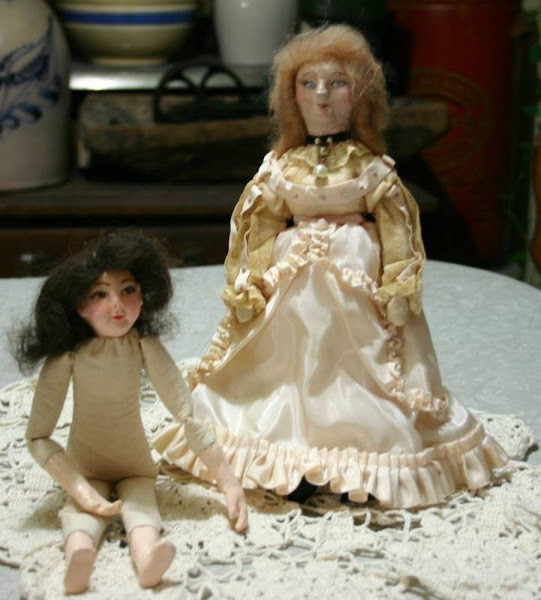
Antique Doll Collector Magazine: "The Early French Fashion Doll Shops of Paris"
Antique Doll Collector Magazine: "The Early French Fashion Doll Shops of Paris": Those who love antique French dolls are in for a treat with our April 2016 issue, where April in Paris is truly a theme with us! Samy Odin ...


Wednesday, March 30, 2016
Grummond Collection
From John Hare
The de Grummond Children's Literature Collection,
University of Southern Mississippi
University of Southern Mississippi
From time to time, we
have mentioned the importance of the de Grummond Collection to Tasha
Tudor research. The de Grummond holds the largest gathering of Tudor's
books, papers and other related material - some 3500 pieces from many
sources.
Here's a recent description from the University itself as published in The Talon (Spring 2016), the alumni magazine. Dawn
Smith, Assistant to the Dean of the Library, relates the history of the
de Grummond collection and its importance to children's literature
research. The pictures are reproduced here with the permission
of the The University of Southern Mississippi Libraries Digital
Collections.
Celebrating 50 Years of Children's Literature at Southern Miss
 |
Dr. Lena de Grummond examining
a new arrival for the collection.
|
When
Lena de Grummond came to The University of Southern Mississippi to
teach children's literature in the School of Library Science in 1965,
she envisioned resources that went beyond the classroom textbook. The de
Grummond Children's Literature Collection is the result of one woman's
dream to collect original materials from authors and illustrators of
children's books to use as resources for students in library science. If
students could study the creative processes of authors and illustrators
by examining the manuscripts and illustrations first hand, she knew
they would better appreciate the literature.
De Grummond became acquainted with a number of authors in her
previous position in Louisiana as state superintendent of Louisiana
School Libraries, and to accomplish her goal, she sent handwritten
letters to them, as well as to her favorite children's book authors, to
request original manuscripts and typescripts, illustrations,
sketchbooks, and any materials related to the publication of a
children's book, including galleys, dummies, publisher correspondence
and fan mail. At one point, she wrote as many as 100 letters per week.
The first to respond were Bertha and Elmer Hader, the husband and wife
author-illustrator team, who sent manuscript materials, dummies and
illustrations for Ding, Dong, Bell (1957). The contributions from the Haders were soon followed by more from Lois Lenski, Elizabeth Coatsworth and Roger Duvoisin.
 |  |
Dr. Warren Tracy, Dr. Lena de Grummond, Dr. Frances Ladner Spain,
and Southern Miss President Dr. William D. McCain at the 1968 Children's
Book Festival.
| |
"Dr.
de Grummond had a vision, and I have no doubt she knew what she was
creating from the very beginning. She developed relationships with
authors and illustrators through correspondence, which is a great legacy
for us. The correspondence with H. A. and Margret Rey shows how their
relationship developed through the years. The personal interest Dr. de
Grummond had for the donors was remarkable. She knew details about
their lives, their children's names, their new projects, etc. She was
sincerely interested in them, and the feeling was mutual," says Ellen
Ruffin, current curator of the collection.
Founded in 1966, the de
Grummond Children's Literature Collection has grown far beyond its
original intent, and is now one of the largest such collections in North
America. The collection contains the works of more than 1300 authors
and illustrators, including Randolph Caldecott, John Newbery, Kate
Greenaway, H.A. and Margret Rey and Ezra Jack Keats. These are some of
the most celebrated names in children's literature with Caldecott,
Newbery and Greenaway all having prestigious national awards named in
their honor, and the Rey's being the creators of Curious George. Keats, the man behind
The Snowy Day, is one of America's most groundbreaking authors with his efforts to break the color barrier in children's publishing, and
The Snowy Day is considered to be one of the most important American books of the 20th century.
These original materials are supplemented by a book collection of more than 160,000 volumes of historical and contemporary children's literature and include Aesop's Fables that date back to 1530, a board game from 1790, more than 100 versions of the Cinderella story and the papers of popular young adult author, John Green. Researchers from across the United States, around the world and all disciplines at Southern Miss visit the collection on a regular basis to study its fables, fairy tales, folklore, alphabet books, nursery rhymes, textbooks, religious books, moral tales, fantasy, fiction, primers, and children's magazines. Complementing these holdings are scholarly studies, biographies, bibliographies, and critical works.
Now
50 years later, de Grummond's legacy lives on. Her influence remains
strong and Ruffin says that she is often quoted in correspondence with
potential donors. While the collection is available for use by students
at Southern Miss and researchers, Ruffin has pointed out her efforts to
the development of the collection, and to some degree, de Grummond's
unique style can still be found in those efforts. The growth of the
collection ensures its longevity and increases its value to the world of
children's literature.
|  |
|
Dr. Lena de Grummond shares books from her collection with two children in this 1970s photo.
|
Since
its founding 50 years ago, the collection has become one of the largest
and most well-known collections of children's literature in the world.
Today, the de Grummond Children's Literature Collection hosts numerous
world-class exhibits from some of the industries' most well-known
authors and illustrators, including Rosemary Wells and Tasha Tudor.
The collection also plays a significant role in the Fay B. Kaigler
Children's Book Festival each year by hosting the de Grummond Lecturer
and the Ezra Jack Keats Book Award, a national award given to newcomers
in children's literature.
1000th Post!
We have a reached a landmark, and during our 6th year have hit our new 1000th post and have over 100,000 Viewers/Readers as well as our beloved followers. We are on Twitter, Facebook, Pinterest, and more. I will continue to post, and keep up my other blogs, my writing on dolls, and my work on ADC and for Antique Doll Collector Magazine. I will also be a guest blogger on the fantastic design journal for R. John Wright dolls, one of the most amazing doll artists ever!
I am also translating this blog into Greek, and hope to also translate it into Spanish and other languages.
Thank you so much for reading my blog, and for making this post 1001 possible!
Dr. E
I am also translating this blog into Greek, and hope to also translate it into Spanish and other languages.
Thank you so much for reading my blog, and for making this post 1001 possible!
Dr. E
 |
| Photos, Old Eclectics, Doll from Dr. E's Doll Museum |
Antique Doll Collector Magazine: Bebe Gigoteur
Antique Doll Collector Magazine: Bebe Gigoteur: This is Ellen, Dir. of Social Media for ADC Magazine. I guess it's true good things come to collectors who wait. At a recent antiqu...
Sunday, March 27, 2016
Dolls Poppin Up Fresh!
Dr. E’s Doll
Museum
Dolls keep popping up for me, literally everywhere. Last night, on the old Tonight Show
rebroadcast from March 1981, Johnny
Carson noted that Poppin Fresh, The
Pillsbury Dough Boy, of which dolls are made, was 20 years old. He then made a joke involving Dough Boy and
Mr. Bill. “Oh, No!”
Ah, the memories! I
went to Spain that Summer of
1981, and we made a lot of Mr. Bill jokes walking together through Madrid
My first Pillsbury Dough Boy doll came from our local
grocery store in about 1973; he was made of vinyl, a dead ringer for the
animated character. Poppin Fresh reminds me of cozy dinners after cold, winter
days at school. The crescent rolls were
a treat for us. Sundays, my mom would
shout down the hall, “Miss Europe! Time to get up!” The whole house was fragrant with Pillsbury
cinnamon rolls, coffee and bacon.
That’s part of the fun of popular culture characters, it’s
easy to associate them with favorite memories involving the character and the
product advertised.
It’s a form of nostalgia, I guess, that becomes more
important as we age.

Thursday, March 24, 2016
An Interview with R. John Wright-Originally on About.com Doll Collecting and Shared Here
 |
| Courtesy, R. John Wright |
 |
| Courtesy, R.John Wright, Spring Time Lambs |
I have been honored as a guest blogger on R. John Wright's magical site, and he in, turn, has honored us with the interview below!
1.
You have
covered many eclectic and wonderful themes in creating your dolls; is there a
dream doll you would still like to produce?
RJW: Interesting
question because there’s many dolls (and animals) we still wish to produce.
Among them are dolls based on the wondrous images created by Maxfield Parrish
and Arthur Rackham - two of our favorite
illustrators. But, these may lend themselves better to tableaux or settings.
As far as a single character, we have long wanted to do
Peter Pan. This would not be Disney’s version but closer to the original
illustrations in the books by J. M. Barrie. When we took our four young
children to London years ago, our first
destination was to visit the famous statue of Peter Pan in Kensington Gardens.
Someday we will find the time to make Peter Pan….
2.
The Fairy
Tale Mice are charming; why did you choose mice to portray fairy tale motifs in
doll making?
RJW: We had just
completed the set of mice representing the characters in the Wizard of Oz and
they were so well-received by fans that we began to think of other ‘mouse’
possibilities. Classic fairy tales seemed like a good fit as it tapped into the
droll nature of our mice. We’re planning a second group now which will include
a haughty mouse depicting ‘The Emperor’s New Clothes.’ Fun!
 |
| Courtesy, R. John Wright |
3.
Your online
history mentions that you started to think about a career in doll making after
you met porcelain doll artist Gail Wilson. Why did you choose cloth as a medium
over porcelain?
RJW: There are a few
reasons why I didn’t gravitate to porcelain. First, I didn’t know anything
about working with porcelain and didn’t have access to a kiln or other
equipment. Secondly, I wasn’t particularly drawn to porcelain dolls. They
seemed cold and a bit too precious to me. I had a vision of dolls that were
warmer and more accessible. And lastly, when I was a child my aunt Genevieve
worked at the legendary department store, J. L. Hudson’s, in Detroit, Michigan.
The window dressers there used quality wool felt in their displays which my
aunt would rescue from the trash and bring home for me to play with. I would
make little theaters and other things using the felt and I think I developed an
affinity for it. When I saw the Steiff dolls were made of felt it immediately
hit a chord with me.
4.
You
mentioned Carl Fox’s “The Doll” was an important influence on your work since
that is where you saw the Steiff school room; have any other books on dolls
influenced your work?
RJW: Right before I
began to make dolls I found a funny little book at the Dartmouth
library in Hanover, New Hampshire. It was called “Dolls &
People” by Jeannette Mowrey and inside were profiles of several doll makers and
doll collectors – with photos of their collections. It opened my eyes to a subculture
of adults who loved dolls. One photo in particular was of some ‘Hillbilly’
dolls made by NIADA artist Grace Lathrop. That image formed the basis of the
very first ‘rustic’ RJW dolls.
 |
| By Carl Fox, Public Domain Image |
“Lenci Dolls” by Dorothy Coleman - the first book devoted to
the Lenci company - came out in 1977. This was our first year making dolls and
the timing couldn’t have been better. We poured over that book in an effort to
learn how to mold felt doll faces and improve our work. In the end we had to
find our own way to learn our craft but the dolls themselves were hugely
inspirational.
5.
Your
expression of children’s literature through making dolls is breath taking. Have
you considered creating dolls influence by other works of literature or drama?
RJW: One thing we’d
love to do is make a series of dolls based on very early Hollywood
stars such as Rudolph Valentino. We’ve also contemplated dolls from famous
ballets. We were recently approached by the Game of Thrones people to consider
a line of dolls but we generally steer clear of very new properties. There are
still many classics we have on our list.
6. I am awed by the meticulous detail in all
your dolls, but especially The Hummel collection. What about Hummels made you want to recreate
them as dolls?
RJW: I went to Catholic
school for 12 years so I think there may be a connection there! I do love the
image of children that Sister Innocentia Hummel portrayed so beautifully. We
were also impressed by how airbrushing on felt evoked the warmth and coloration
of the original Hummel paintings and figurines. It all began to seem like a
good fit.
 | |
| Celestial Messenger, the Hummel TM Collection, Courtesy, R. John Wright |
7.
Are you a
doll collector, too? If so, what kinds of dolls do you collect?
RJW: As expected, we primarily collect cloth dolls. However,
we don’t have hardly any contemporary artist dolls in our collection. Instead,
we gravitate towards antique dolls which were manufactured in much the same way
our dolls are. These primarily include early dolls by the Lenci, Kathe Kruse,
and Steiff companies. I also have a humorous collection of mid-century felt cartoon
characters made by Lars of Italy.
8.
Who are your
favorite artists, not necessarily doll artists? Why?
RJW: I am especially
drawn to Vermeer’s paintings - but of course who isn’t?! There are many other
painters I admire that are on most people’s list: Sargent, Homer, Mary Cassatt,
Degas, Van Gogh. A more obscure artist is the Swiss painter Albert Anker.
 | |||
| Young Girl by Mary Cassatt, Public Domain Image |
 | |
| Albert Anker, Kind mit Puppe [Child with Doll] | Public Domain Image |
Susan has always loved the baroque painters such as Caravaggio
while I gravitate towards the cooler, more Northern aesthetic. I think that
makes us a good pair!
9.
What are
your thoughts about the future of doll making?
About the future of doll collecting?
RJW: When we started
out we were inspired by the companies who manufactured the antique dolls we
admired so greatly. While I was a member of NIADA it became obvious that I was
an anomaly. All the members were either people who made dolls alone or sold
their designs to companies to produce. Now, decades later, we’re struck by how
there are still so very few artists who opt to produce their own dolls in
quantity under their direct supervision. Most artists simply don’t want the
headache of hiring and training a production team. So the future of doll making
will most likely continue with artists crafting their dolls by themselves and
far fewer companies making collector dolls.
 |
| Simon, the Toddler Bears, Courtesy R. John Wright |
As for doll collecting, there will always be people who seek
out excellence whether it be in the realm of antiques or currently-made items.
And there will always be people who love dolls. But I think it will be a far
smaller number than we saw in the ‘collectibles’ boom in the 80s and 90s. It
will most likely resemble the world of doll collecting before that time which
was a small subculture of people who were doll enthusiasts, not unlike the
stories in “Dolls & People” which was published in 1956.
10. Do you have any advice to share with either
young artists or young doll artists?
RJW: I would
encourage doll makers to be “one’s own worst critic” - always striving to
improve and never settling for less than the best you can do. As doll makers for 40 years, we’ve found
that’s what keeps it most interesting!
 |
| Courtesy, R. John Wright |
Monday, March 21, 2016
Antique Doll Collector Magazine: An Interview with Collector Laurie Baker
Antique Doll Collector Magazine: An Interview with Collector Laurie Baker: I started collecting antique dolls about 15 years ago, after deciding that making antique-reproduction dolls was not the best fit f...
Subscribe to:
Posts (Atom)
